
Travel, wrote Francis Bacon, the 16th-century essayist, is a form of education. “They who travel into a country, before some entrance into the language, go to school,” he wrote.
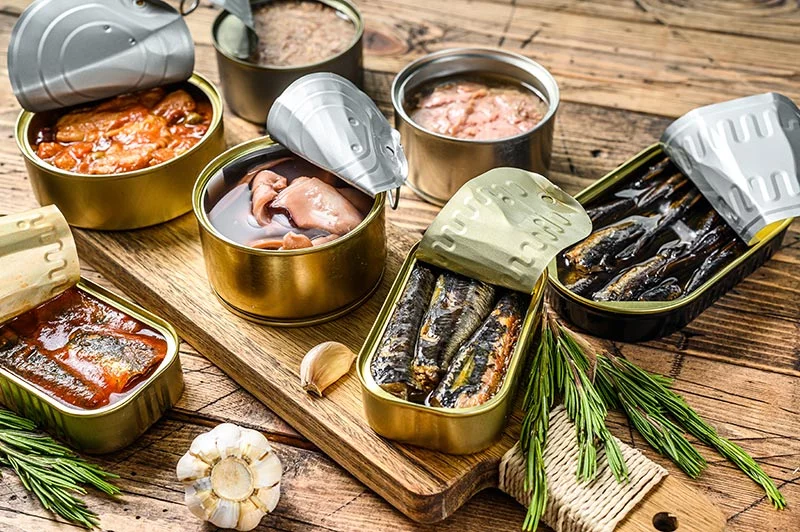
If you eat around Spain and Portugal on a trip to Europe, you and your kitchen will learn much more about eating tinned fish than its generally singular place for us Americans in the tuna salad sandwich.
“Conservas,” as both the Spanish and Portuguese languages call them, are tinned fish recipes that appear on so many tables and in so many ways — as lunchtime centerpieces, on evening nibble platters, even in breakfast egg preparations.
So, in a manner, travel to the Iberian Peninsula, even though you may not breach our own shores, by opening a tin and enjoying the enormous variety of tinned fish available stateside.
The season of Lent is upon us, with its emphasis on free-standing fish dishes come mealtime. Alone, a tin of fish and some accompaniments fulfill that. But here are several more suggestions for Lenten (and post-Lenten) dining that utilize tinned fish and seafood.
Tinned fish and seafood offer easy, healthy meals
Here are a handful of simple ideas for turning a single tin of fish into an easy meal, snack or brunch dish.
Tuna on corn tortillas with mustard and cornichons
Peel open a tin of tuna preserved in olive oil and use chunks of it to top envelope-sized corn tortillas, dabbed with a soupçon of grainy mustard and a tart cornichon.
Smoked trout or clams stirred into cottage cheese sandwiches
Mix a tin of smoked trout, brined cockles, or clams into cottage cheese, and use the mixture as the inner layer of a sandwich, using slices of hearty, springy-crumbed rye or levain bread, lightly toasted.
Messels in escabeche tossed with pasta
Spanish and Portuguese tinned mussels are commonly preserved in the tangy, vinegary sauce called escabeche. Drain a tin (but not completely) and toss such mussels as the Iberians do, with pasta, minced garlic, lemon zest, and finely chopped mint or basil.
Anchovy toasts with orange marmalade
Lightly charred tinned squid for salads or risotto
If it’s late spring or summer and your grill is a-going, place some tinned squid on the grate, char it lightly on all sides, then add it to an already-made rice salad or even a risotto based in fish stock and short-grained rice (use the paella rice grain called Bomba), with ample gratings of sharp Spanish cheese such as Manchego curado.
Vegetables in escabeche with full-flavored tinned fish
For brunch, try vegetables (cabbage ribbons, carrot fingers, cubed potatoes, sweet red or yellow pepper strips, onion slices, mushroom caps) in vinegary escabeche, full-flavored tinned fish (mackerel, for example), lightly toasted and buttered semolina bread.
Potato salad with preserved octopus
Make a potato salad using waxy spuds such as Yukon Gold (dressed in lemon juice, extra virgin olive oil, crushed herbes de Provence, slivers of fresh garlic), then add a drained tin of preserved octopus pieces (cut up if large). Toss and let sit for half an hour to marry the flavors. Serve cool or at room temperature.
Variations on tuna in olive oil for Niçoise-style salads
Vary the tinned tuna (always use tuna preserved in olive oil, never water) on a salade Niçoise by using canned salmon or tinned smoked trout. Or shell out for the best possible tinned tuna, such as that labeled “bonito del Norte” from Spain.
Feta ‘hummus’ topped with tinned fish and peppers
In the bowl of a food processor, make a very smooth-textured “hummus” from a 6-ounce block of feta cheese and 1 tablespoon of fruity extra-virgin olive oil. Scrape that onto a plate and top with any tinned fish of your choice (drained, if necessary), strips of pimiento pepper (or other pickled or preserved sweet pepper), chopped flat-leaf parsley leaves and a sprinkle of Urfa or Aleppo dried pepper flakes. To the side: the best crackers or flatbread.
Why tinned fish is a smart, sustainable choice
One very nice side benefit of using tinned fish is that it often features underfished rather than overfished seafood. It is unfortunate that the most common over-fished fish, tuna, is also the most commonly available tinned fish in America. If buying tinned tuna, try to obtain it from pole-and-line rather than longline tuna fishers. Examine the tin’s label for the words “pole and [or &] line.”
Also, because tinned fish is available year-round, outside the seasonal fishing times of either hemisphere, buying and eating tinned fish rather than fresh-caught fish allows fish stocks to recover in their native oceans or seas.
I’ve made the recipe here for Tinned Tuna Sauce to serve atop any manner of sliced prepared or previously cooked then chilled meat: cold cuts, roasted pork loin, chicken tenders or piccata paillards, white meat schnitzel, even more fish itself such as cooled grilled swordfish or salmon filet.
It is the sauce for the famed Italian preparation of cool veal called Vitello Tonnato, even if few of us any longer cook veal. A legion of substitutes for the baby beef awaits.
Tinned Tuna Sauce recipe: A versatile recipe for Lent and beyond
Makes about 1 1/2 cups.
Ingredients
- 1 5- to 7-ounce tin pole-and-line caught tuna in olive oil, drained
- 5 anchovy filets in olive oil
- 1 tablespoon capers, packed in salt preferred, rinsed and squeezed
- 2 tablespoons freshly squeezed lemon juice
- 1 cup mayonnaise, homemade if possible
- Freshly ground white pepper, to taste (optional)
Directions
Place all the ingredients except the mayonnaise in the bowl of a food processor and pulse and process until very smooth, about 2 minutes, scraping down the sides of the bowl once or twice.
Scrape the contents of the processing bowl into a larger bowl and gently but thoroughly fold in the mayonnaise and optional ground pepper. Check for salt seasoning level. (Additional salt may be unnecessary because the tinned fishes and capers, the latter though rinsed, may add sufficient salt.)
Bill St. John has written and taught about restaurants, food, cooking and wine for more than 40 years, locally for Rocky Mountain News, The Denver Post and KCNC-TV Channel 4, nationally for Chicago Tribune Newspapers and Wine & Spirits magazine. The Denver native lives in his hometown. Contact Bill at [correo electrónico protegido]