
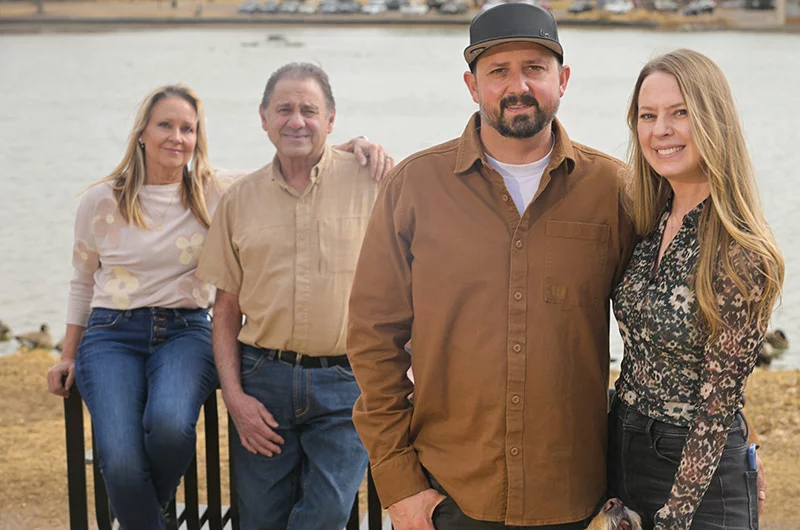
Before we get into the story of how Zach Zemljak’s long-deceased grandfather probably saved Zach’s life, a public service announcement: If you have close relatives who have died young from heart failure or sudden heart issues, seek genetic testing as soon as possible.
You can get help through UCHealth or elsewhere. The DCM Foundation’s Genetic Cardiomyopathy Awareness Consortium can also assist people.
Perhaps half of cardiomyopathies — diseases of heart muscle — have genetic causes, with nearly two dozen mutations now implicated. Caught early, medicines, medical devices and lifestyle changes can slow and even reverse damage that can lead to heart failure and sudden deaths caused by cardiomyopathy-related arrhythmias.
The sooner you identify heritable cardiomyopathies, the better, says Dr. Luisa Mestroni, a prominent genetic cardiomyopathy expert and a professor of cardiology at University of Colorado Anschutz School of Medicine who cares for patients at UCHealth University of Colorado Hospital. Despite that, only a tiny minority of people harboring these mutations actually get genetic testing.
Biobank study delivers critical genetic insight into disease-causing genes
Zach was lucky. His father Ed, now 68, was hospitalized at University of Colorado Hospital in April 2023. A member of his care team asked if he would be interested in participating in the Colorado Center for Personalized Medicine’s biobank study. Ed remembered a conversation he once had with his father. Ed’s dad had told him that he had agreed to participate in a clinical trial. Ed asked, “Why would you want to do that?”
“He said, ‘Because I can help somebody else,’” Ed recalled.
So, Ed said “yes,” and his results from the biobank study would help somebody else. And not just anybody.
Ed has a mutation in the FLNC (filamin C) gene. When the biobank spots such a disease-causing gene, it lets participants know. FLNC encodes a protein critical to the structural integrity and electrical signaling of heart muscle. Tests showed Ed’s heart function to be unaffected. But he and his wife, Renee, recognized that the FLNC mutation might explain dark moments in Ed’s family history. His mother had collapsed and died of an apparent cardiac arrest at age 56. A cousin on his mother’s side had died of heart failure at 38.
Perhaps genetic cardiomyopathy, in which FLNC and 20 other genes the biobank tests for are implicated, had been the cause of those premature deaths in the family. In that case, Zach could be at risk.
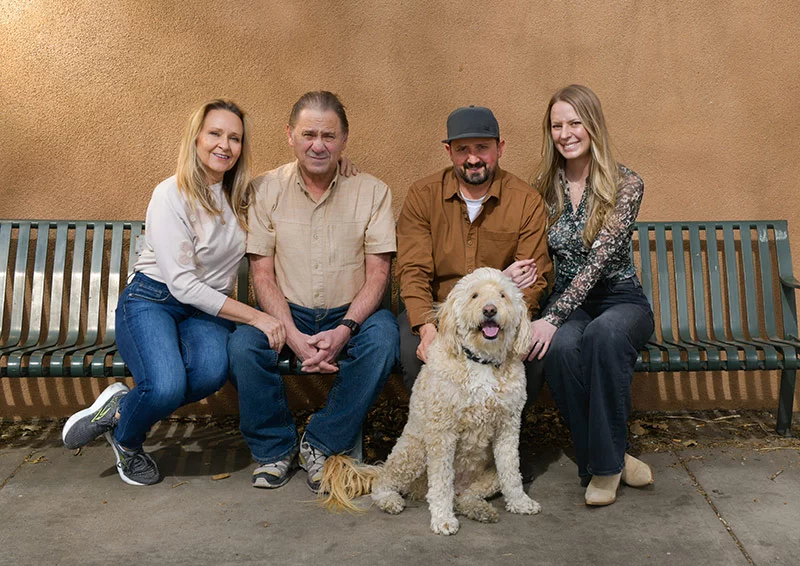
Catching genetic cardiomyopathy early is key
Zach, now 39, was busy working as an architect and felt fine. Yes, his jogs around Denver’s Washington Park felt a bit tougher than in the past, but he chalked it up to getting older. His days as a self-described “adrenaline junkie” — as a sponsored inline skater who dabbled in cliff jumping — were long behind him, anyway (“we called him our walking medical bill,” Renee joked, sort of).
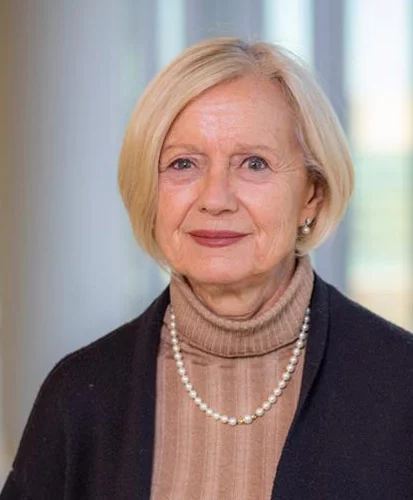
Photo courtesy of Dr. Luisa Mestroni
It was February 2025 before Zach took advantage of a Colorado Clinical and Translational Sciences Institute program that provides no-cost genetic testing, labs and echocardiogram testing for immediate family members of those found to have a mutation implicated in genetic cardiomyopathy.
“Catching it earlier means that, often, relatives have a better prognosis than the patient originally diagnosed,” Mestroni said.
Zach indeed had the FLNC mutation, and despite feeling fine, his heart was pumping less than half as much blood with each beat as it should have been (technically, a left-ventricle ejection fraction of 34%, as opposed to the normal 55% to 70%). There was further testing under Mestroni’s watch, including a stress test, an MRI and two weeks with a Holter monitor to track his heart rhythms. That led to a diagnosis of dilated cardiomyopathy.
Whereas another common form of hereditary cardiomyopathy, hypertrophic cardiomyopathy, thickens the heart muscle, dilated cardiomyopathy thins and stretches it.
Dilated cardiomyopathy is particularly scary because it’s even more prone than hypertrophic cardiomyopathy to cause electrical problems that can trigger sudden arrhythmias that stop the heart from pumping blood and can kill without warning.
“It forms fibrosis in your heart muscle that is conductive, so the electrical currents in your heart can get looped,” Zach said.
An implant and medications combine to combat dilated cardiomyopathy
Mestroni and colleagues use a predictive risk calculator including variables such as ejection fraction, numbers of and types of arrythmias, age, gender and more to predict the risk of a “major arrhythmic event” in the next five years. Zach’s risk was high enough that they referred him to the UCHealth electrophysiology team. In October 2025, he received an implanted device called a cardiac resynchronization therapy with defibrillator, or CRT-D. The device keeps tabs on his heart’s chambers and electrically nudges them into sync; if a major arrhythmic event happens, it can also provide a jolt for a cardiac reboot. That hasn’t happened yet, Zach says.
Medications are also in play. Zach’s initial impulse was to resist taking a suite of drugs.
“He’s the kind of person who doesn’t like to take Tylenol because he thinks it messes with his mental clarity,” his wife, Caitlin, said.
But Zach recognized the value of combining four primary medication classes to treat dilated cardiomyopathy and has been diligent in taking those meds. As Mestroni described, beta blockers improve the physiology of the heart at the molecular level; ARNIs help heart muscle offset dysfunctional heart-muscle biology; spironolactone reduces the risk of sudden cardiac death and coaxes the heart’s left ventricle back toward a normal shape; and SGLT-2 inhibitors, originally for diabetes treatment, help the heart in several ways.
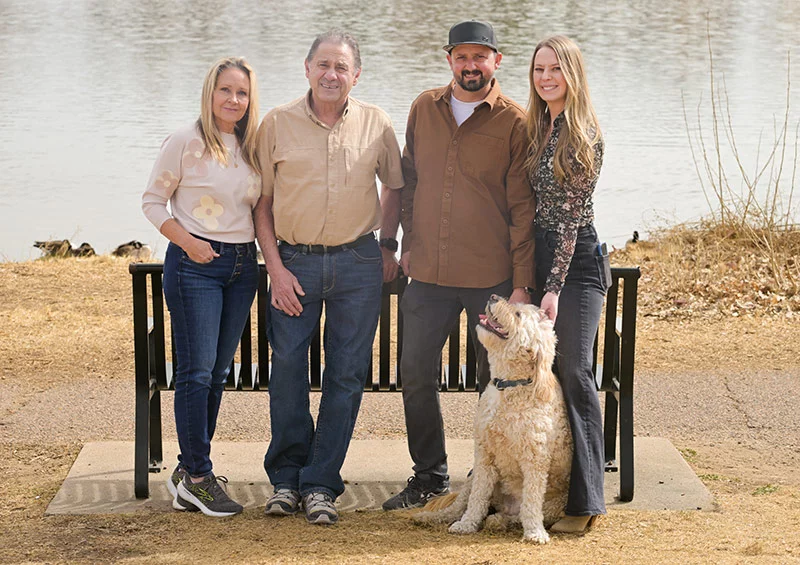
Lifestyle changes also help protect the heart
Zach’s also doing his part. While he’s avoiding heart-stressing high-intensity exercise as Mestroni advises, he’s out biking or on his Peloton five to six days a week, he’s tracking macronutrients, and has changed his diet to focus on healthy fats. He also stopped drinking alcohol.
“My lifestyle has changed dramatically,” Zach said.
The adrenaline junkie in him has had to say goodbye to things like skydiving, which he dabbled in.
“The electrophysiologist was kind of joking with us, and was like, ‘Well, no jumping out of planes anymore,’ Caitlin said. “And Zach was like, ‘Wait, that’s a problem?’”
Mestroni says Zach’s prognosis is good, and that the combination of Zach’s efforts, the medications and the backstop of the CRT-D implant can “work very well for many, many years.”
A round of testing in early March found Zach’s heart to have responded exceptionally well to the combination of medications, lifestyle changes and the CRT-D: His left ventricle ejection fraction had risen to 50%.
Mestroni, whose team played a key role in identifying the FLNC gene’s complicity in dilated cardiomyopathy, is optimistic that emerging gene therapies might reverse genetic cardiomyopathies before too many years pass.
In the meantime, the Zemljaks hope their story helps drive awareness of how important it is for families with histories of heart failure or sudden cardiac death to get genetic testing done.
“And we hope that, with more momentum in genetic testing, eventually the research and the gene therapies will lead to a cure of the disease itself,” Renee said.