

The young Black woman doctor arrived in Denver in 1902, eager to practice medicine, but authorities refused to recognize Dr. Justina Ford or grant her privileges at the city’s hospital.
That didn’t stop Ford.
For 50 years, she treated patients in her home, paid house calls to immigrants, people of color and other underserved patients, and delivered more than 7,000 babies, leaving a remarkable legacy.
And year after year, Ford kept fighting for long-overdue recognition from the medical establishment. Officials with the Colorado Medical Society finally recognized Ford in 1950, two years before she died in 1952 at age 81.
Dr. Justina Ford confronted discrimination, earned her medical license and fought for a place in Colorado’s medical community
When Dr. Jacqueline Ward-Gaines, an emergency medicine specialist at UCHealth University of Colorado Hospital, thinks about Ford, she is absolutely awestruck.
Not only was Ford a pioneer in medicine, but she also had remarkable patience and persistence to fight for her rights.
“This is someone who applied year after year to the American Medical Association, the Colorado Medical Society and the Denver Medical Society. And, it’s not until 1950 that they let her in.
“They kept telling her ‘no,’ but she kept trying year after year. It’s beautiful to have that persistence,” said Ward-Gaines, who is also an assistant professor at the University of Colorado School of Medicine on the Anschutz Campus.

ER doctor invokes Dr. Justina Ford when teaching medical students, using her story to show what’s possible
Ward-Gaines said there were only seven students of color in her medical school class at the University of Chicago Pritzker School of Medicine in the 1990s, nearly a century after Ford graduated from Hering Medical College in Chicago in 1899.
“It still shocks me that she made it through,” said Ward-Gaines, who found her own experience in the 1990s challenging and counsels many medical students and residents of color today who are weary of having to plow paths in schools and professions that still are not as diverse as they should be.
“I invoke Dr. Ford with medical students. I tell them, ‘I know you’re going through times that are trying. Medical school training is so stressful, but I want to give you a positive role model to get you through,’” Ward-Gaines says.
She tells them how Ford’s mother was a nurse, and Justina followed her mom around to soak up knowledge. As a little girl, she learned about anatomy by playing with frogs and preparing chickens for dinner so she could explore their insides.
Dr. Justina Ford earned her medical license and grew into the healer many called the ‘Mother Teresa’ of Denver
After graduating from medical school, Justina and her husband moved to Alabama, where she worked for a short time. Her husband then came to Denver to serve as the pastor at Zion Baptist Church and Ford later joined him. She expected to be received well in Denver but ran into discrimination right away.
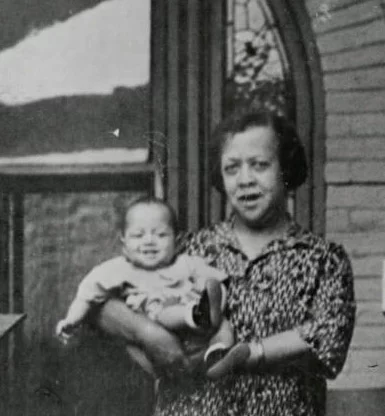
When she sought her medical license, the examiner told her, “I feel dishonest taking a fee from you. You’ve got two strikes against you. First of all, you’re a lady, and second, you’re colored.”
Ford later told a writer for the Negro Digest that she “fought like a tiger” against discrimination.
Ford received her medical license – No. 3800 – on Oct. 2, 1902, and for decades was the only Black woman doctor licensed to practice medicine in Denver.
Ford tried right away to get privileges at Denver General Hospital, now known as Denver Health, but was turned away from the hospital, as were all Black people at the time.
The Fords purchased a two-story brick home in the Five Points area east of downtown Denver, and Ford started seeing patients there. She practiced gynecology, obstetrics and pediatrics. She was known for caring for anyone who needed help and loved bringing babies into the world. One family described her arriving to deliver a baby on Thanksgiving. As the mother labored, Ford put on an apron and helped finish Thanksgiving dinner, then delivered the baby. One man described her as the “Mother Teresa of Five Points” since she cared so compassionately for everyone who needed her.
“Imagine her doing all this in the 1800s and early 1900s. I think of the adversity she faced. It was unbelievable,” Ward-Gaines said. “I embrace pioneers so much. They did things twice as hard as we’ve done.”
Denver celebrated Dr. Justina Ford’s 150th birthday in 2021
Ford was born on Jan. 22, 1871, and Coloradans marked the 150th anniversary of Ford’s birth in 2021. (View tributes to Ford in the video below, courtesy of Sylvia Lambe, Lambe PR.)
Ford’s home was nearly torn down in 1984, but preservationists from Historic Denver saved it and moved the home from its original location at 2335 Arapahoe Street to 3091 California Street, where it’s now home to the Black American West Museum & Heritage Center. The office and waiting room Ford used are on permanent display at the museum.
Ward-Gaines works the overnight shift in the emergency department at University of Colorado Hospital. In that capacity, she sees a lot of critically ill people, including many people of color.
She developed a curriculum for emergency medicine residents to boost health literacy and health equity, so students and young doctors can provide high-quality care to everyone. She also works to improve the recruitment and retention of underrepresented minorities at the University of Colorado medical school and in residency programs.
Ward-Gaines served as a flight surgeon in the military and has lived in Denver for more than two decades.
She learned about Justina Ford after moving to Denver. Whenever Ward-Gaines moves to a new place, she seeks out information about Black heroes like Ford.
“Black history is left out of Denver history,” Ward-Gaines said.
She was thrilled when she visited the Black American West Museum and learned more about Ford. She loves seeing photos of Ford and visiting her exam room. She pondered how a woman of color overcame so many obstacles so long ago.
“She was out there making a difference for Black lives when nobody else was,” Ward-Gaines said. “I call upon the rest of us who are underrepresented minorities in medicine to take it upon ourselves and use whatever avenues we can to also do the best for our people.”
And for everyone who is looking for inspiration during Black History Month, Ward-Gaines encourages people to find heroes who share their profession or passions.
“Open your eyes and enjoy this,” she said.
Whatever you do for work or fun, you can find a Black person who excelled in that field but was not properly honored or recognized.
“Be curious. Be like a child. Find that information that will interest you. That’s my biggest challenge to everyone. There are a lot of people who did great things and never got the media attention.”
For Ward-Gaines, Dr. Justina Ford is a wonderful pioneer she loves learning about. But there are plenty of other lesser-known heroes who we also can celebrate during Black History Month. For inspiration, check out Black heroes who are highlighted at History Colorado, the Denver Public Library, and the Blair-Caldwell African American Research Library, close to Ford’s former home.