
The virtues of cast iron cookware are several. It takes any heat, from very low to super high. It retains that heat if the recipe calls for it. Over time, it develops a nonpareil non-stick surface. And it’s fairly easy to care for, even eschewing soaping and scrubbing. Backpackers often “clean” their cast iron Dutch ovens with gravel or river sand.
Cast iron cookware also lasts a lifetime — or more than a lifetime. George Washington’s mother “gave and devised” one-half each to her two grandchildren her “iron kitchen furniture,” her cast iron cookware.
So why is it that so many cast iron skillets and Dutch ovens while away their own long lives in the nether regions of the kitchen cabinetry?
I spoke to a few home cooks to find out why. “It’s not fashionable anymore,” says one; “too heavy,” says another.
And myths about cast iron pans persist: “I can’t reduce my (acidic) tomato sauce in it.” Or “cook with wine” or other acidic foods in it. Or “Cast iron is a pain to maintain.” Or clean, or keep from rusting.
As the first president’s mother might have said to these cast iron naysayers, “Pshaw!”
Why cast iron beats other pans
Cast iron’s non-stick surface, if lovingly established, may not be as slick as fry-a-nude-egg Teflon, but nonetheless it will take higher heat than the latter, still be nearly as slippery and, to some folk’s minds, safer for it.
The key to cast iron’s patina and an answer to many of these complaints is what’s termed its “seasoning,” the polymerization (or to use a less techie term, “plasticization”) of the cooking fats or oils with which it comes in contact during both cooking in it and caring for it.
Stovetop or oven (or even burning charcoal) heat breaks down these oils into large-chain molecules that then bond to the iron itself in a never-ending layering — if the dang pans are used, people — that becomes impermeable to (mild) acidity, makes the pan facile to clean and maintain, and resistant to rust and oxidation.
In the end, it’s cast iron’s way with heat that selects it as a preferred ware for much cooking. It just makes common sense when you think of it.
John Hinman, proprietor of Denver’s Hinman Pie and one of the region’s top pie makers, answers his own question, “How often do you get a pie when the top is done but the bottom is still soggy? A lot.
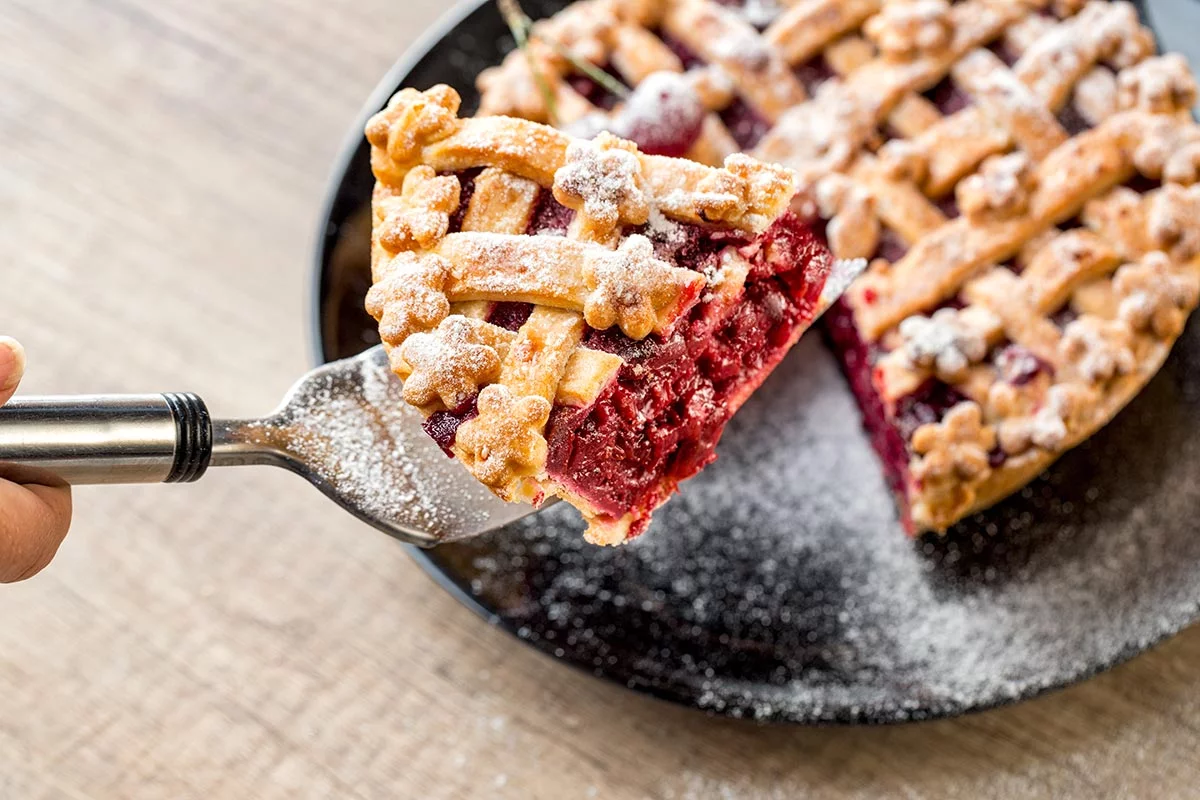
“With cast iron, the fact is that when the pie is done, because the pan keeps so much heat, the bottom continues to cook. The pan nurtures and finishes the cooking, plus it continues to force moisture in the form of steam out through the top vents.”
Sounds like a win-win. Right, Mother Washington?
Hinman’s Cast Iron Skillet Cherry Pie recipe
Makes 1 pie, using a 9-inch cast iron skillet
Baker John Hinman’s note: Using a high-quality European-style butter really improves the crust. While making the crust, make sure your butter is really cold—almost frozen—and that your water is ice water.
The assembled balls of dough, well-wrapped, will keep in the fridge for 2 days or in the freezer for months.
Ingredients
Dough:
- 2 1/2 cups all-purpose flour
- 1 cup (2 sticks) unsalted butter, very cold, cut into 1/2-inch cubes
- 1 teaspoon salt
- 1 teaspoon sugar
- 6 to 8 tablespoons of ice water
Filling:
- 5-6 cups (2 1/2-3 pounds) fresh or frozen tart pitted cherries
- 1 1/4 cup granulated sugar
- 4 tablespoons cornstarch
- 1 1/2 teaspoons vanilla extract
- 3/4 teaspoon almond extract
To finish:
- 1 egg
- 1 tablespoon milk
- Sugar in the Raw
Directions
For the dough: In a mixer, combine flour, sugar, salt, and butter. Mix on medium speed until the butter is broken down into pea-sized shapes. Add cold water. Turn up the speed on the mixer a few times until the dough just comes together. Turn out on the table, press the dough together with your hands and divide into two equal portions. Wrap them in plastic wrap until ready to use. (It’s a good idea to leave them overnight in the refrigerator.)
For the filling: Cook the cherries in a heavy-bottomed pot over medium heat. When they start to juice, add sugar and cornstarch. Cook until thickened, stirring occasionally. Remove from heat and add extracts.
Make the pie. Split the dough in half. Roll 2 9-inch circles and press one into the pan. Pour the cooked cherry filling into the pie shell. Whisk together egg and milk to create an egg wash. Brush wash around the crust rim of the bottom pie shell. Put the top crust on, and pinch together around the outside. Using thumb and forefinger, crimp the crusts together. Put in the fridge or freezer for 45 minutes. Meanwhile, preheat the oven to 375 degrees.
Cut 8 star-shaped vents in the top and brush the top crust with egg wash. Sprinkle Sugar in the Raw on top and bake 15 minutes at 375 degrees, and then 30-40 minutes at 325 degrees.
How to care for your cast iron
The best care that you can give your cast iron cookware is to use it. Over time, cooking fats and oils will form “seasoning,” a slick, nonporous, non-stick, impervious, hydrophobic patina, the breakdown and plasticization of the oil molecules into stronger molecules that bind themselves to the iron itself. Once the seasoning is set, so are you.
Here are two other great recipes using cast-iron skillets:
- Tarte Tatin: A Valentine’s Day dessert from New York
- Seared Scallop Crudo
If the seasoning on the cast iron is solid and present, it is OK to cook with lightly acidic ingredients — or, if highly acidic (such as lemon juice or tomatoes), quickly.
Clean up cast iron by merely wiping it with paper towels or a stiff, nylon brush or nylon scraper under hot, running water (metal brushes and pads aren’t overly harmful — unless they contain dish soap or detergent — but by and large aren’t necessary either).
Reinforce the seasoning by drying the cookware in a warm place (a turned-off, cooling oven is ideal) and then, when the pores on the cookware are dried out, wiping a fine film of vegetable oil over all (avoid any animal-based fat). Finally, once again, wipe clean or gently buff with dry toweling and store in a dry cupboard or cabinet.
Stubborn, burned-on foods can be removed by simmering some water in the pan or pot, to cover, then brushing or scraping away.
Because cast iron heats well though slightly unevenly (and even sports its share of hot spots), if using on stovetops, place the cookware on a burner nearest in size or diameter to the cookware itself.
Be sure to have plenty of insulating oven mitts, thick kitchen towels or silicon heat pads on hand when using cast iron. It’s easy to forget that a handle on a piece of cast iron cookware can be severely hot.
Yes, old, rusted cast iron (yay, flea markets!) can be rescued. You may read how-to online. Just search for “how to clean rusted cast iron.”