
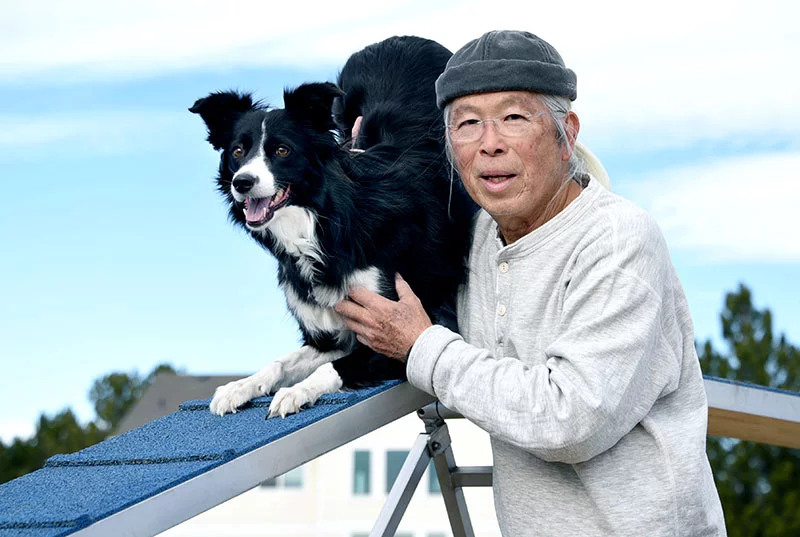
The border collie weaves through poles, leaps over jumps, darts through tunnels and sprints up ramps — all in mere seconds.
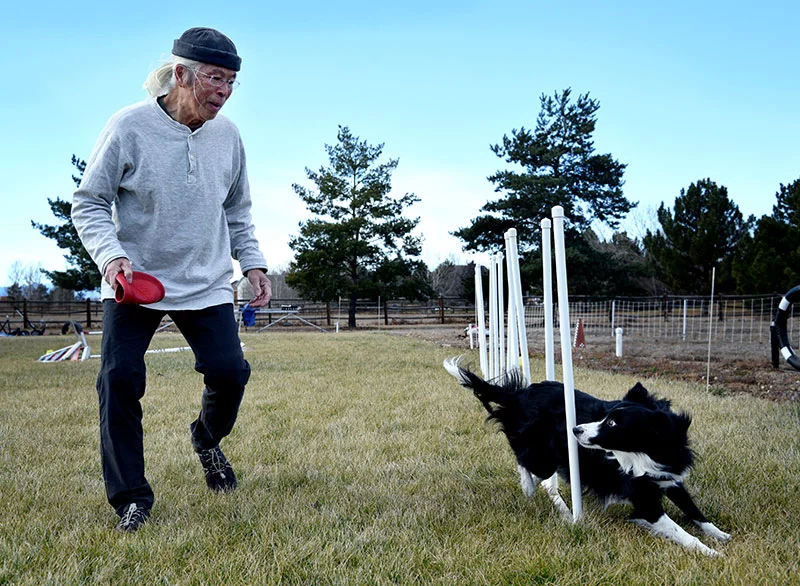
His name is Olay. And this 7-year-old’s focus and speed are awe-inspiring. So is his intelligence. As Olay pivots perfectly through an obstacle course, he looks to his owner, Alan Tay,71, and watches and listens for cues on his next move.
Alan and Olay have been a team since Olay was a puppy. He got his name because Alan imagined a crowd of people cheering for this dog like Spanish soccer fans who chant Olé, olé, olé, olé! Alan’s wife is also a fan of the Olay skincare brand, so they picked an unusual spelling.
The name seemed like a perfect fit.
“I thought to myself, maybe there will come a day when the fans sing Olay’s name as we run the course,” Alan said.
That would happen eventually at a national agility competition, but first, Alan and Olay had to work together and train for years.
Then they would have to overcome a major challenge after a stroke destroyed Alan’s endurance, coordination and memory, thwarting the duo’s teamwork. If Alan hesitated, Olay sometimes froze, waiting for signals on his next move.
Early signs of a stroke surfaced quietly, then quickly became impossible to ignore
On a warm July day in 2025, Alan and two friends were driving back to his home in Loveland, Colorado after a weekend in the mountains near Crested Butte. The college friends had enjoyed plenty of laughs, memories and hikes to view abundant wildflowers.
Alan had driven down Cottonwood Pass and was heading into Buena Vista when suddenly, he couldn’t make his hand click on his turn signal. For a moment, he felt a panicky feeling that something so simple and natural suddenly seemed hard. But the feeling passed.
Then the next day, Alan was sitting at his computer sorting through photos of wildflowers. Second to dog agility training and competitions, Alan loves photography, especially capturing beautiful photos of wildlife and nature.
Alan was uploading and editing images from the Crested Butte weekend when the same strange sensation that he felt in the car hit him again. A task that should have been automatic felt hard.
Alan stared down at his keyboard, but he couldn’t get his fingers to strike the correct keys.
He called to his wife, believing that he might be having a stroke. His slurred speech made it clear that he needed medical care, so Alan’s wife drove him to his primary care clinic. (If you’re having a stroke, medical experts say it’s critical to call 911 immediately rather than driving yourself to get care. That’s because every second counts when people are having strokes.)
At the clinic, staff members also suspected a stroke and wanted to call 911. But Alan’s wife insisted on driving him to UCHealth Medical Center of the Rockies, a few minutes away.
At the hospital, doctors found a blood clot deep in the right side of Alan’s brain that was causing his symptoms.
Imaging revealed, however, that Alan actually had suffered a stroke a few days earlier.
This meant Alan no longer was a candidate for TNK, a clot-busting drug that can help improve stroke outcomes if patients receive it within six hours after the onset of stroke symptoms.
For people who already have had a stroke, doctors follow a different treatment regimen.
“It becomes all about preventing the next stroke,” said Dr. Tom Mueller, Alan’s neurologist at Medical Center of the Rockies.
Doctors gave Alan a blood thinner and monitored his blood pressure, cholesterol and other stroke risk factors.
“Alan wasn’t a typical stroke patient in that he didn’t have hypertension or high cholesterol. He was pretty healthy,” Mueller said. “But a stroke is pretty simple. It is a ‘sudden one-sided something,’ meaning something on one side isn’t working as it should. When that happens, you need to get to the hospital pronto. And that was part of our education to Alan.”
The next day, Mueller performed several neurological exams, all of which Alan passed. Doctors decided Alan could continue recovering at home. He was exhausted but had no noticeable deficits since his clot had resolved. His doctors encouraged Alan to rest for six weeks and to avoid exertion or stress.
Halting dog agility training to recover from a stroke
The six weeks felt like an eternity. Alan never has had a sedentary lifestyle — and neither has Olay.
“Olay knew something was wrong with me,” Alan said.
And as Olay awaited directions from her owner, Alan felt alone, without a clear path of his own.
Olay and Alan had been a team since Olay was just weeks old. Alan had been looking for another agility partner after the loss of his other two border collies, Rain and Harper. Harper was a rescue dog who didn’t fare well in agility competitions; he preferred being the family’s house dog. But Rain, who was also adopted, loved to compete. And after having competed at a top level nationally with Rein, Alan was eager to continue on the agility circuit, where he was well known.
Alan let others in the community know he was looking for a new partner. That’s when an Alaskan dog breeder reached out about her new litter of border collies. Alan had a hunch that one of these puppies would be a good fit for him. He had seen videos of Olay before he was weaned from his mother, and both of Olay’s parents had the ideal build for agility. Alan was hopeful that with the right training, his new puppy could grow into a champion.
A few weeks later, the 8-week-old black-and-white puppy arrived in Colorado.
What skills are required for dog agility?
Dog agility tests how canines navigate a variety of obstacles. Speed, power and jumping are all key. Here are the key obstacles and how they work in dog agility:
- The jump. Course designers vary the height of the jump based on each dog’s height and ability level. A dog must clear the jump without knocking down the jump bar.
- The dog walk. This exercise requires dogs to use balance, focus and concentration as they navigate across three 12-foot-long end-to-end planks. The center plank is horizontal and about 4 feet off the ground, while the planks on either end start from the ground and form a ramp up to the center plank. The dog must touch its paw within the last three feet of the plank before exiting the dog walk.
- The A-frame. This obstacle consists of two wide planks, which are connected at the top and form an “A” shape about five and a half feet off the ground. Again, the dog must touch its paw in a certain area at the bottom of the A-frame to successfully complete the obstacle.
- The teeter. This challenge works much like a teeter-totter on a child’s playground, minus the handlebars. It is 12-feet-long and weighted so that the high end of the teeter can hit the ground in 3 seconds or less when a dog advances over the center point. A dog must pause and wait for the teeter to hit the ground before advancing to the next obstacle.
- Weave poles. This challenge consists of 3-feet-long vertical PVC pipes, usually spaced about 24 inches apart. Dogs must weave between each pole successfully to move on.
- Tunnels. These dark tunnels are at least 24 inches in diameter and range from 10-to-20 feet in length. Dog agility course designers create either straight or curved tunnels, and dogs must enter and exit the tunnel in the correct direction. The challenge is especially tough because dogs can’t see their handlers while they’re inside the tunnel.
The judge builds a course from multiple obstacles. There can be anywhere from 16 to 22 obstacles on each course, depending on the class level.
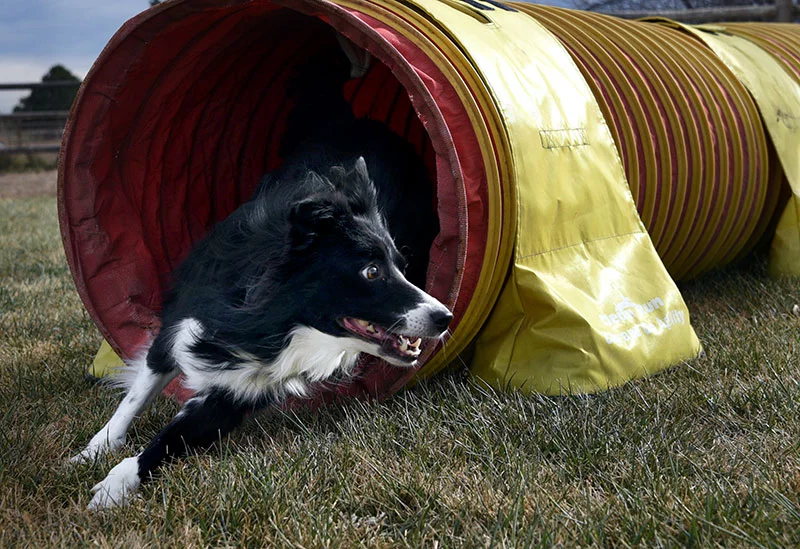
Handlers, like Alan, get 8 minutes before each competition to walk the course and memorize the moves they’ll need to make. All of the handlers walk the course at the same time, so Alan must ignore distractions and focus intently on the tasks ahead.
“Agility involves memory and connecting skills. I need to remember, one, two, three, four … I have to remember where to go and when to spit out the commands while I’m running and I’m exhausted,” Alan said. “The trick is visualization. As I’m doing my walk-through, I must visualize what we will do and look for visual cues I can use.”
Handlers aim to help their dogs finish each course in the fastest time and with the fewest mistakes.
“It’s an addictive sport,” Alan said. “It’s challenging, and when you compete, you always want to redo it and do it better. You always want to come back for more.”
In order to excel at dog agility, handlers need a lot of patience, and their dogs need a lot of training.
That starts when they’re puppies.
Growing in the sport of agility and training Olay
Alan first fell in love with dog agility back in 1997 when he participated in a dog obedience class with one of his former puppies in his home country, Singapore. He saw instructors nearby who were teaching dog agility, and Alan instantly knew he wanted to learn about this exciting sport.
“There is no running or racing in dog obedience. It’s boring.” Alan said. “I needed the excitement of agility.”
Alan joined the Singapore Kennel Club and competed with one of his previous dogs, Mako. For 10 years, the duo competed together, and Mako won the club’s award for Agility Dog of the Year in 1999.
But Singapore was too small for Alan’s ambitions in dog agility. He wanted to compete on a larger stage. His job in sales and marketing allowed for flexibility, and he asked his boss if he could be transferred to one of the company’s U.S. offices. It was in Minnesota.
Dog agility was still in its infancy at that time, but it was starting to take off in the U.S. On weekends, Alan would attend training schools and watch competitions. He built a network in the dog agility world, which led him to realize he needed to move to a new home if he wanted to excel in the sport.
After six years in Minnesota, Alan had the opportunity to move for his job again. This time, he chose Colorado.
“I knew my next property needed to have open space where I could train my dog,” Alan said.
He found a house with land outside of Loveland and spent the next year building his fencing, installing irrigation, growing grass and purchasing training equipment. He joined the Colorado Agility Club and also taught agility classes.
By then, Alan’s previous dogs had died, and he was working to train Olay.
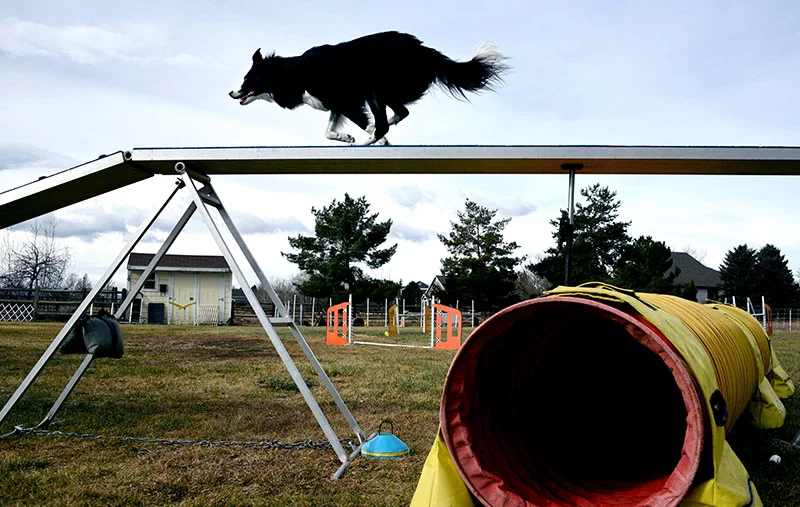
Dogs start training for agility as puppies and start jumping at 18-months-old
For dogs to stay healthy in agility, they can’t start training on jumps until they’re at least 18 months old. It’s key for handlers to wait until a dog’s growth plates stabilize so they don’t injure their joints.
But handlers can do plenty of training with puppies well before they start jumping. Alan worked on the fundamentals: getting Olay to listen and follow cues and beginning to recognize obstacles.
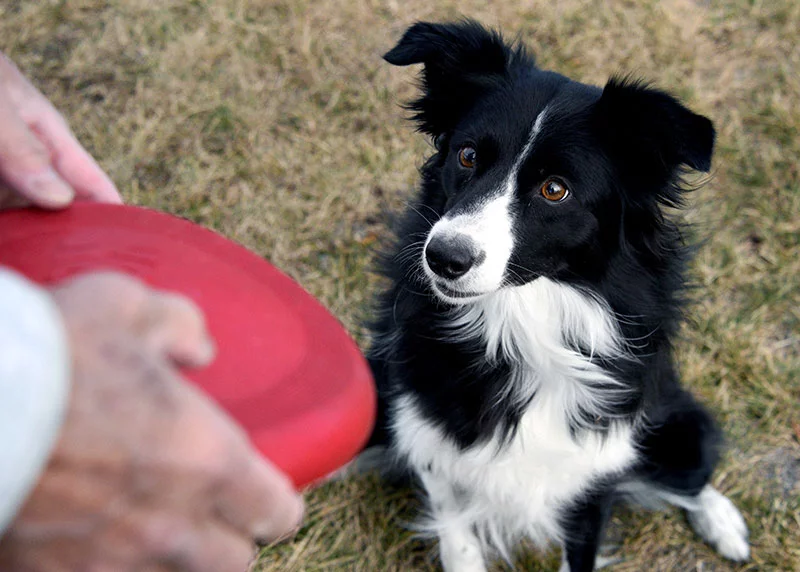
“It’s repetition of behaviors followed by positive reinforcement through food, treats or play,” Alan said.
That process fosters a strong partnership between the handler and the dog.
“Partnership comes with a lot of training and practice, simulating situations that we will see in competition. The dog must learn to focus on the handler and not notice all the distractions,” Alan said.
It would be these fundamentals that Alan would return to just months after his stroke — not just for Olay, but also for himself. Just as Olay needed to learn how to navigate obstacles, so, too, did Alan.
If Alan was ever going to compete in dog agility again, he had to start with the fundamentals, rebuild his strength, work to improve his skills and start clearing hurdles again.
And to do that, he needed a good trainer himself.
Deficits from Alan’s stroke undermined his success in dog agility. He needed a trainer himself.
To succeed in dog agility competitions, Alan had to be quick both mentally and physically. He needed to stay one step ahead of Olay to give his dog clear signals both with his hands and his voice.
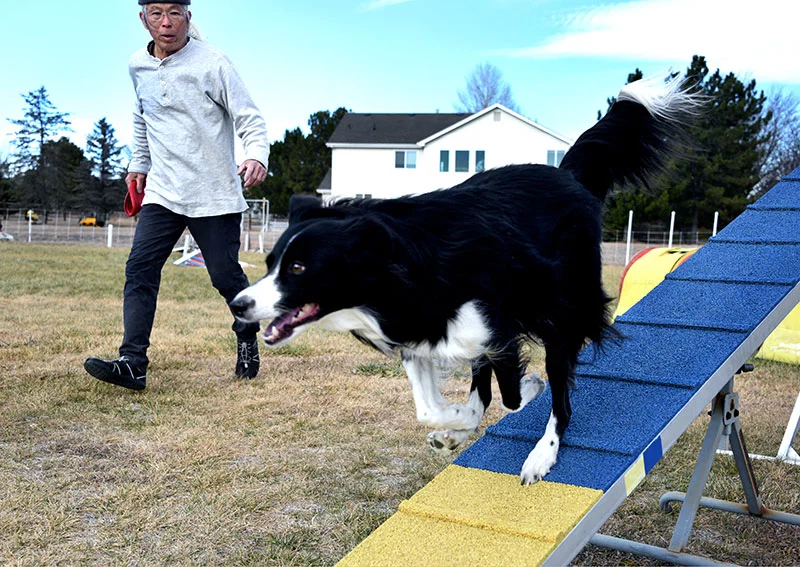
The partners have a shared language that helps Olay navigate courses. And six weeks after his stroke, Alan was struggling to communicate quickly and seamlessly with Olay. He felt drained, hardly making it 50 feet through the training course before he had to quit. His steps felt heavy. He seemed to be stuck in slow motion. And words that should have come easily evaporated in the middle of Alan’s commands.
“I couldn’t call commands,” Alan said. “I couldn’t remember, so Olay couldn’t listen.”
Trying to reclaim his favorite activity following his stroke but not being able to speak or move as he once had was deeply frustrating and shattered Alan’s confidence. He fell into a deep depression, believing he might have to give up his life’s passion forever.
But Alan learned that, like Olay, he didn’t have to navigate life’s obstacle courses alone. He could ask pros for help. And they could help guide him through dark tunnels, over hurdles and across life’s teeter totters. Then, like Olay, Alan needed to listen for commands and signals.
Leaning on others, Alan worked with physical therapists to recover from his stroke and compete at a high level again in dog agility
After Alan’s failure in his training arena about two months after his stroke — when a 50-foot jog exhausted him — he decided to reach out to a sports therapist, who specializes in preventing and treating injuries in athletes. Alan had previously worked with the sports therapist.
Agility requires a lot of twisting, turning and quick directional changes, and if Alan got injured, Olay also suffered. Long before his stroke, Alan had worked on staying fit and moving properly to avoid injuries. But now, he knew he needed more specialized help so he could reconnect those pathways from his brain to his body.
Two months after his stroke, he started seeing Belinda Richardson, a neurological physical therapist who works with outpatient rehabilitation services at Medical Center of the Rockies.
Richardson’s 14 years of working with stroke patients have taught her that motivation must come from within. And that starts with a patient’s personal goal.
“I tell my patients, especially after a stroke, that it is more about your own motivation and dedication to the exercises that can make all the difference in the world,” she said. “I’ve seen really significant injuries, and I am amazed so many times at how much progress a patient can make. But it really comes from within and a patient’s desire. That’s why I like setting that patient-specific goal.”
Alan didn’t have to think long about his goal.
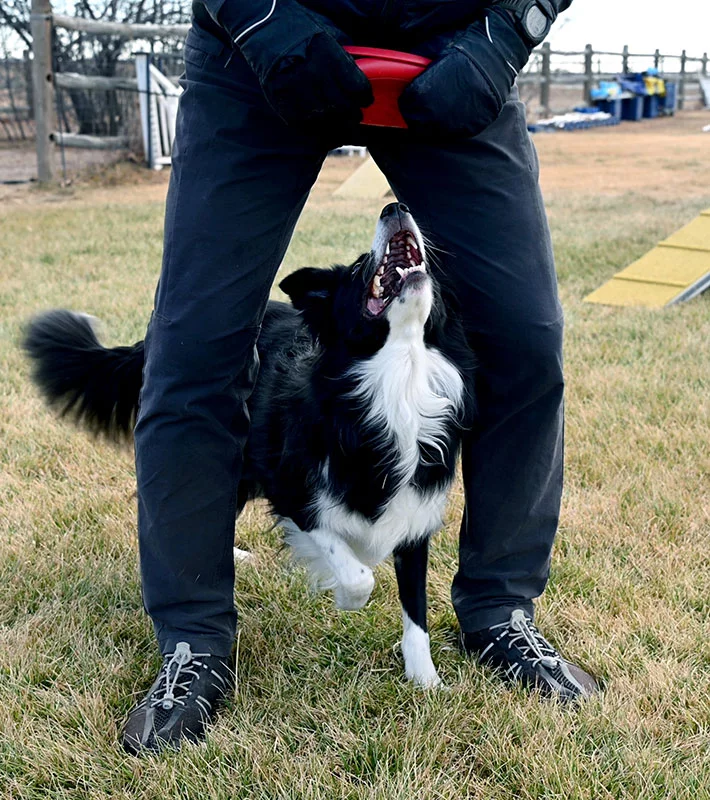
“When I first saw her, I told her, ‘You have to help me get back to running, back to agility,’” Alan said. “I showed her some of the training videos I had with Olay. Then she put me through some assessments to test my balance, cardio and muscular structure… and we continued with that for five sessions.”
Richardson said Alan was doing great with everyday tasks, but he was dealing with some deficits that made dog agility competitions challenging.
Her evaluation of Alan revealed two areas that they needed to focus on: endurance and functional strength, which helps stroke survivors avoid falls.
Recent research has suggested that high-intensity interval training, also called HIIT, after a stroke can improve cardiorespiratory fitness and walking endurance more than moderate-intensity continuous exercise. Richardson walked Alan through the course they were going to take. Now it was time to start practicing. Just like Olay, Alan needed repetition, repetition, repetition.
“We started on an upright bike each session,” Richardson said. “He’d do 30-second intervals where he would try to go really, really fast, and then I’d give him a minute to recover when he could go his own pace.”
She alternated bike workouts with circuit training workouts that initially included simple exercises like side lunges, forward lunges and squats.
“We built a program that he could carry out at home, too,” Richardson said.
Within the first few sessions, Alan’s endurance started to improve. Richardson was impressed by his effort, but she noticed he couldn’t maintain that endurance while conversing.
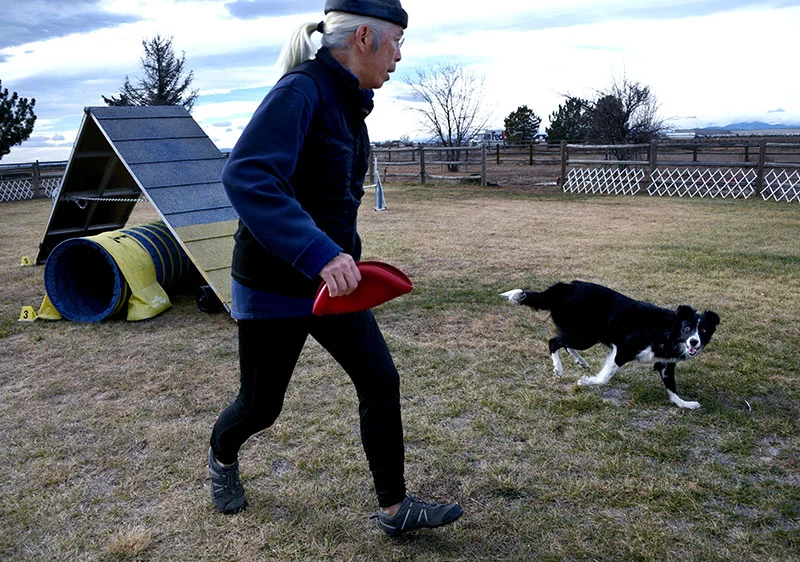
“Most dogs will read cues, and they get that from my movement, such as motioning with my hand,” Alan said. “If I’m running, Olay will chase me, but she can’t run into me. She needs to stay a bit away. She learns from my arm directions and listens to my verbal cues, all while establishing eye contact.”
If Alan was going to return to competitive agility competitions, he needed to work on doing two key things at the same time: strengthening his motor skills while also thinking clearly. Alan needed to work on blending his physical and cognitive abilities to once again become a peak competitor.
“That was the missing piece,” Richardson said.
She started off slowly but soon challenged Alan to handle obstacles quickly, just as he would need to face them in an arena.
“He not only had the challenge of the exercises. I had him doing all kinds of crazy things, like side shuffles, back-and-forth across the gym, modified Romanian dead lifts, heel and toe walking as fast as he could and backward hops — dynamic, hard challenges. And at the same time, I would have him call out commands that he would need to give his dog.”
All of this was part of Alan’s high-intensity interval training, with high-burst exercises for a minute followed by a short recovery period.
The training paid off.
On Alan’s fifth and final session with Richardson, he came to his appointment with exciting news. On Oct. 19, 2025, three months after his stroke, Alan and Olay returned to their first post-stroke competition. And they won first place. Not only that, but their score was good enough to automatically advance them to the final round of nationals.
“He was so excited,” Richardson said. “I was so happy for him that what we had done really translated into him achieving his goal.”
Being at the top of your game requires continuous training and support
Success after the stroke and reaching a key goal of once again excelling in dog agility competition lifted Alan’s spirits. The course to get there had been challenging. And though Alan credits Richardson with helping him work on his physical and cognitive abilities, he also recognized that he needed mental health support too.
The stroke — and the prospect of losing the life he loved — had pushed him into a depression. Physical therapy alone couldn’t help him overcome life-and-death fears. While Alan worked on strengthening his skills with Richardson, he also began meeting with a mental health therapist to contend with the emotional challenges of surviving a major life event. Alan continues to work with his therapist regularly and also finds relief by participating regularly in the UCHealth stroke support groups.
“You need to find people to talk to,” Alan said. “Belinda helped me figure out what I needed to do to train again, but by attending the Life After Stroke support groups, I felt hope again.”