
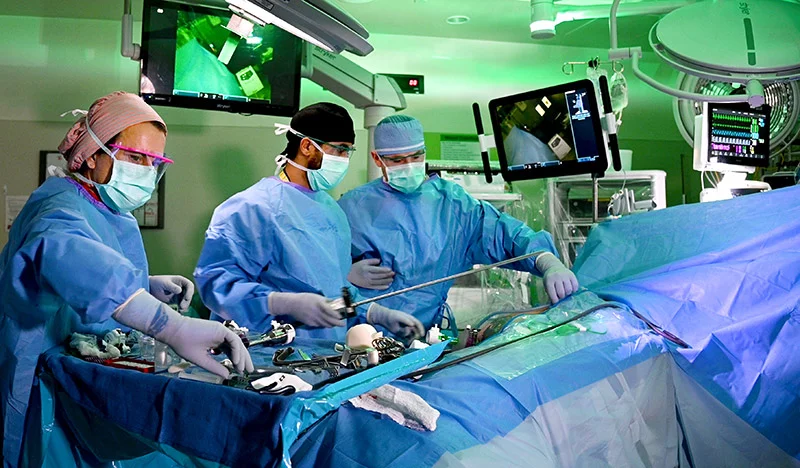
Breakthrough technologies and evolving surgical techniques have transformed transplant care at UCHealth University of Colorado Hospital, where procedures once considered experimental 60 years ago are now safer, less invasive and more accessible than ever.
These advancements fueled a milestone year for the program in 2025 including the completion of the 1,000th lung transplant, 1,000th heart transplant, 5,000th kidney transplant and 3,000th liver transplant — adding to the program’s more than 10,000 transplant surgeries since 1962.
In the early days of transplant medicine, solid organ transplant surgery was seen as experimental, risky and uncertain. Patients often spent weeks or even months in the hospital recovering. Today, advances in technology and surgical techniques have transformed transplant care for both recipients and living donors, resulting in smaller incisions and shorter recovery times.
“When we were performing transplants in the 80s, the procedures were far more invasive and every transplant carried uncertainty,” said Dr. Igal Kam, chief of transplant surgery at UCHealth from 1988 to 2016.
That contrast is especially clear when looking back at the experiences of some of the earliest living donors. When she was 22 years old and the mother of a 10-month-old, Patty Newman Coy Byrn was willing to take a risk to help save her older brother and be a living kidney donor. Patty donated her kidney in 1966 at what is now UCHealth University of Colorado Hospital, where early transplant teams were still pioneering the procedure.
“They cut me from the middle of my stomach to the middle of my back, and they took a rib out to get the kidney out so it wasn’t damaged,” said Newman Coy Byrn.
Patty, now 82, lives on a farm near her hometown of Kirksville, Mo. She has four children, 21 grandchildren and 12 great-grandchildren. Today, that same surgery is far less daunting — performed quickly, considered low-risk, and in a minimally invasive surgery for living donors.
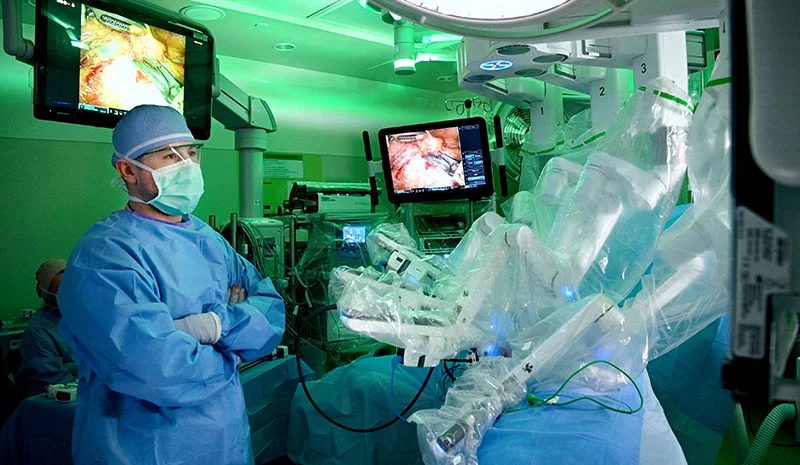
“I spent only one night in the hospital after my surgery, and when you think about it — although you’re doing something really big, the surgery itself is somewhat small. The incisions are small and recovery is fast,” said Sam Carter, who underwent a robotic-assisted surgery to donate her kidney to her sister in December 2025. “It’s incredible we get to do this, to give an organ so that someone else can start their life over.”
As transplant medicine advanced, UCHealth experts continued finding ways to improve access, eligibility, recovery times and outcomes while pushing boundaries of what’s possible in transplant medicine.
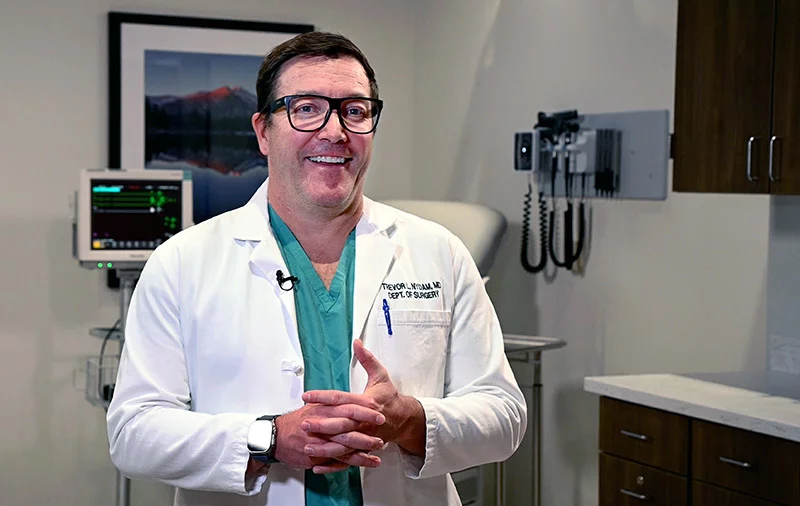
“Today, UCHealth performs robotic-assisted kidney transplants, multi-organ surgeries, and complex living donor procedures—all with dramatically shorter recovery times and higher survival rates,” said Dr. Trevor Nydam, current chief of transplant surgery at UCHealth University of Colorado Hospital. “Decades of innovation have really changed the game for transplant surgery.”
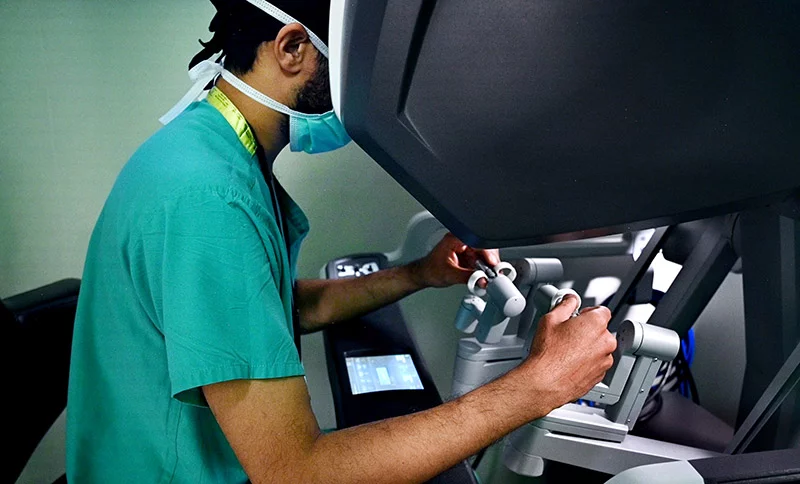
There are two ways to become an organ donor: by registering as a deceased donor, often indicated on a driver’s license, or by choosing to be a living organ donor. One of the most transformative and significant shifts in transplant care for living donation has been in the last five years — the introduction of robotic-assisted transplants, a less invasive surgery option. In 2020, UCHealth launched its robotic-assisted transplant program with kidney donors, followed by kidney recipients in 2021 and liver donors and recipients in 2023.
The robot, which involves the surgeon controlling robotic arms and instruments, creates a 3-D visualization inside the body, eliminates difficult hand positioning, and uses several small incisions the width of a pencil. The goal is to decrease recovery time and improve the overall experience for transplant recipients and donors.
According to the Organ Procurement and Transplantation Network (OPTN), more than 120,000 people across the country are waiting for lifesaving organs.
Living donation has given patients more options. UCHealth has one of the largest living donor programs in the country and advances in surgery and recovery times have made this an easier option for people to consider.
“Making living donation more accessible has the power to change the trajectory for patients who might otherwise wait too long,” said Dr. Nydam. “By continuing to innovate and make donation safer and less disruptive to donors’ lives, we hope more people will consider this extraordinary act of generosity.”
For deceased donation, the biggest shift in recent years is organ perfusion technology that preserves organs outside of the body and allows clinicians to assess whether the organ is healthy enough for transplant. Having this knowledge helps lower uncertainty and increases positive outcomes.
History of the UCHealth Transplant Program
- 1962: First kidney transplant performed at what is now UCHealth University of Colorado Hospital.
- 1963: World’s first liver transplant performed at University of Colorado Hospital.
- 1966: First living kidney donation
- 1986-1995: Transplant program expands with its first heart (1986), lung (1992), and pancreas (1995) transplants
- 1997: First living liver donation
- 2020-2021: Introduction of robotic-assisted transplant surgery
- 2025: UCHealth completes 10,000 transplants
UCHealth has the largest comprehensive transplant center in the Rocky Mountain region and is the only center performing all solid organ transplants — heart, lung, liver, kidney and pancreas. To learn more about the program and how to become a living donor, visit our website.