
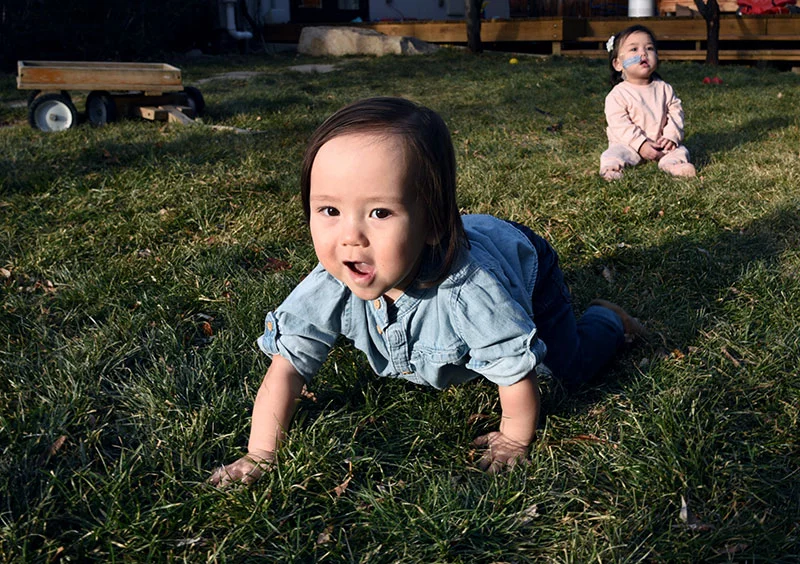
The ultra preemies defied long odds ever since their mom’s water broke when she was just 20 weeks pregnant.
The twins’ parents clung to hope as their babies fought through additional weeks in utero, then faced frightening challenges after they were born.
Now these babies will carry hope with them all of their lives. It’s part of their names and central to their survival story.
She’s Summer Hope. And he is Grayson Spero. Spero means “to hope” or “I hope” in Latin.
The Tran twins, now just over a year old, are a tribute to the fighting spirit of these littlest of humans, each of whom weighed just 2 pounds when they were born at 27 weeks in October 2024.
Today, their parents, Alyssa and Nhanh Tran, feel gratitude and happiness every time they see their babies.
“They amaze me every day,” Alyssa said. “I’m so excited to see what they will do with their lives. Nhanh and I are in awe of them as we watch their lives and story unfold. We have so much excitement and joy for them.”
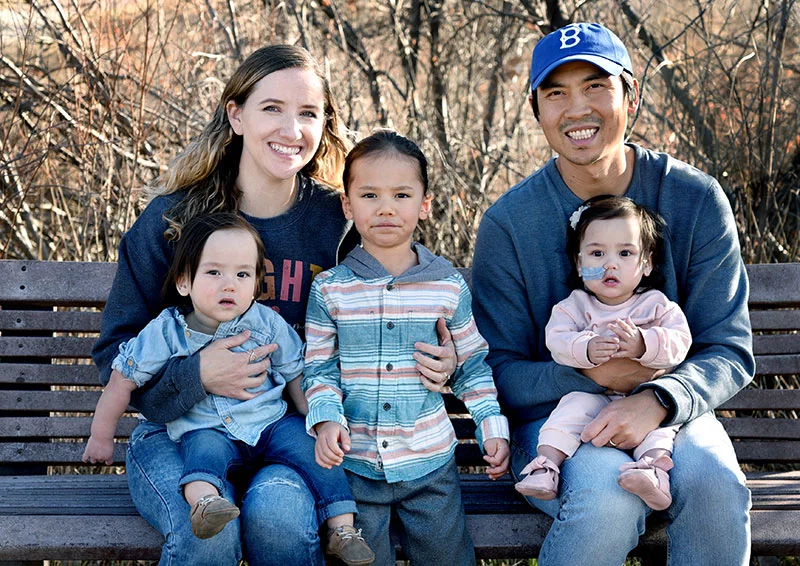
Things looked bad. The parents clung to a ‘sliver of a chance’ that their babies would be OK.
After Alyssa’s water broke dangerously early, she and Nhanh faced gut-wrenching realities. Could Alyssa stay pregnant long enough for the babies to have a fighting chance, and once born, what medical challenges would they face?
“During that time, we lived hour by hour, not day by day,” Alyssa said. “We couldn’t plan far out into the future at all. We leaned into our faith. There was literally nothing we could do, as it was out of our control … We just had hope, prayer and faith.”
The family would receive care at UCHealth University of Colorado Hospital, which has one of the preeminent neonatal programs in the region.
“Things looked bad, and while it seemed a lot was stacked against (the babies), the doctors gave us that sliver of a chance that it would be OK, and the kids would pull through and lead a normal life,” Nhanh said. “A lot of things could have gone wrong, but we were so lucky.”
For the doctors, nurses and staff in the labor and delivery and neonatal intensive care (NICU) units at University of Colorado Hospital, the outcome for the Tran twins was wonderful when scenarios for other extremely premature babies can turn tragic.
“We’re really lucky to have a great multi-disciplinary team in place to help with the most high-risk pregnancy situations,’’ said Dr. Jennifer Braverman, who worked with the family in the labor and delivery unit. “This was a dangerous situation for Alyssa and her babies. We were so fortunate to be able to consult with her about all of her options, and so happy for everyone that it turned out so well.”

Balancing hope and realism can be a difficult juggling act for the obstetricians and neonatologists who work with expectant parents during what should be one of the happiest times of their life, said Braverman, also an assistant professor of obstetrics and gynecology at University of Colorado School of Medicine on the Anschutz Campus.
Instead, couples must face difficult decisions about whether their babies will survive, and at what cost.
“We try to make space for both hope and reality, and we can make space for both,” said Dr. Laurie Sherlock, a neonatologist who works with the youngest of babies born at UCHealth. “We can give people the realities and be incredibly honest about what they and their babies are up against, and also let them know a lot of these babies do very well after very hard journeys. They are very resilient.”
Alyssa and Nhanh had to tap into reservoirs of resilience as well.
Alyssa learned she was pregnant with twins back in June 2024. Parents of then 3-year-old son Brooklyn, she and her husband were excited and surprised with the news that their family would soon include a plus-two addition.
“We were in a lot of shock for a couple of weeks and felt overwhelmed at the thought of dealing with twins,” Alyssa said. “But it turned out that (having twins) was going to be the least of our problems.”
Excitement about a pregnancy takes a scary turn when Alyssa’s water breaks at only 20 weeks
By late August 2024, Alyssa was reaching the midpoint of her pregnancy with the twins and scheduled for a 20-week ultrasound. But the night before the procedure, she began leaking fluid. She called her OB-GYN team at UCHealth Highlands Ranch Hospital, and her doctors told her to seek help from the high-risk pregnancy experts at the University of Colorado Hospital.
The leak would be the beginning of a long and scary pregnancy ordeal for the parents and their babies.
Alyssa was experiencing preterm pre-labor rupture of membranes, also known as PPROM, which is when a baby’s amniotic sac breaks before 37 weeks of gestation. Fetal membranes are the layers surrounding the baby, containing the amniotic fluid. In Alyssa’s case, the membranes surrounding Summer had ruptured, while Grayson’s amniotic sac remained intact.
Usually, rupture of membranes, or when a woman’s “water breaks,” occurs late in a pregnancy and signals the onset of labor. When the amniotic sac breaks just halfway through a pregnancy, it is a dangerous situation for both the mother and her baby. Often, women go into labor within hours or days after their water breaks, and Alyssa was at high risk of delivering before the babies could survive outside of the uterus. Even if she were able to remain pregnant, there were still many risks to her and her babies.
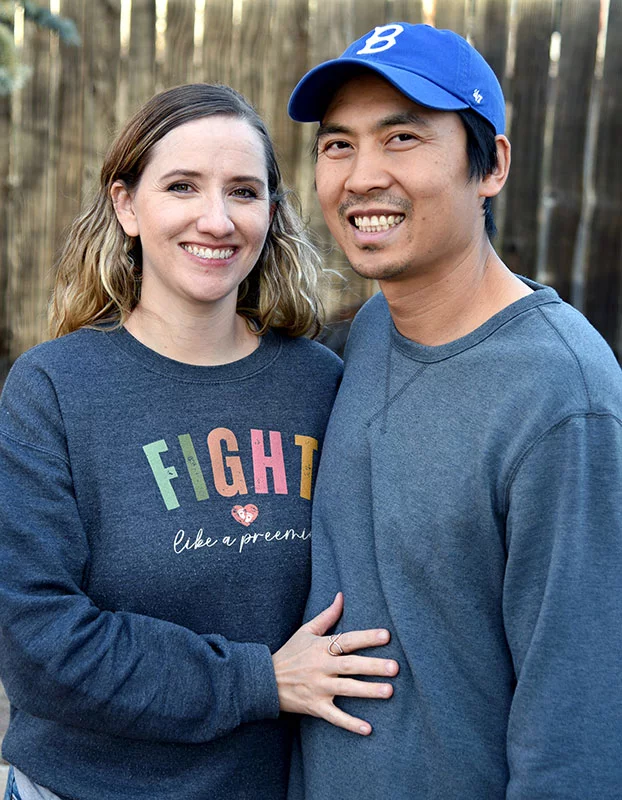
The amniotic sac and the amniotic fluid within it protect and cushion the baby and the umbilical cord, regulate temperature, contain essential fluids and nutrients from the mother, such as proteins, electrolytes, vitamins and immunoglobulins, and most importantly in Summer’s situation, help the baby’s lungs develop.
While a baby can still get blood and nutrients through the placenta and umbilical cord, the amniotic sac is also a barrier to the outside world, preventing bacteria from getting in through the vagina and into the uterus. Without this barrier, women with ruptured membranes and their babies are at serious risk of life-threatening infections. Rupture of membranes also increases the risk of the placenta separating from the wall of the uterus. This is known as placental abruption. And it’s another life-threatening condition for both the mother and the babies.
Were the odds in Alyssa’s favor that she would be able to continue a viable pregnancy? What risks would she be taking by continuing the pregnancy? And how far along did the twins need to be in order to have a fighting chance to stay alive and thrive?
When Alyssa arrived at the labor and delivery unit, doctors immediately placed her on antibiotics, and she and her husband endured painful conversations with various specialists. Staff from NICU met with them to provide counseling about what to expect after birth.
Doctors gave them the information, time and space to let them make decisions on how to proceed. Sherlock is part of a team of doctors who have dedicated much of their careers to delivering and caring for extremely premature infants.
“We first have a conversation with the couple, where we learn who they are as a family. This helps us make a list of the information they need, what they are hoping for and what they want to avoid. We come back with the answers. Some families like generalizations, some like details. We try to meet them where they’re at, as they are grappling with extremely difficult choices,” said Sherlock, who is also an associate professor of pediatrics and neonatology and a palliative medicine fellow at University of Colorado School of Medicine.
“For this couple, it was, ‘Surprise, you are pregnant with twins. Surprise, your babies might die, and you must learn to be NICU parent.’ That is a huge landscape shift.”
Knowing that University of Colorado NICU experts can resuscitate babies who are born at 22 weeks was a big comfort for Alyssa and Nhanh.
“I can’t even say how much hope Dr. Sherlock gave us. I don’t want to make it seem like she was giving us false promises, but she gave us accurate information that helped us,” Alyssa said.
The couple, released from the hospital after a few-days stay, made a decision: Providing that Alyssa’s health was not at risk, they would hope for the best for the twins and continue the pregnancy.
“As long as they had a chance, we were going to try,” she said.
Two weeks later, at 22 weeks pregnant, Alyssa returned to the hospital, where she remained for the remainder of her pregnancy.
Her job then was to cocoon her infants as long as possible and to wait and wait.
Every day gives the Trans a little more hope and babies a better chance to beat the odds
With each passing day, Alyssa and Nhanh allowed themselves a little more optimism. Every additional week spent in utero meant important heart, lung and other organ development for the twins, along with a possibility that the medical problems once they were born would not be insurmountable.
Maternal-fetal medicine experts monitored Alyssa for complications, making sure she never had a fever, which would indicate an infection. They also checked her heart rate along with vitals on the twins.

“It’s a marathon, not a sprint, and getting to know the parents and bonding with them helps build rapport, trust, and confidence in the team,” said Kelsey Camillo, a registered nurse, who was part of the NICU team that cared for the twins.
The days passed as Alyssa walked around the unit, worked remotely, and was happy to see Brooklyn, who came after preschool and on weekends. Neighbors helped take care of their son when Nhanh was with her at the hospital, and Nhanh’s sister flew in from Alabama to lend a hand as well.
“The NICU team is excellent. They spent a lot of time before the birth answering all our questions on outcomes and what to expect,” Alyssa said. “They did their best to prepare us for what it was going to be like so that we kind of knew what was going to happen.”
Part of that was knowing she was going to have a cesarean delivery. Alyssa also happened to be part of a UCHealth research study aimed at understanding how to reduce trauma and stress for parents who must have cesarean births. The Trans spent time in advance of their babies’ birth in the cesarean delivery operating room and learned more about what cesarean birth would entail.
“I truly feel that exposure and experience prepared me for delivery day and helped me mentally cope with that day and time,” Alyssa said.
After five weeks of waiting, in mid-October, when she was 27 weeks pregnant, Alyssa started bleeding. One of the baby’s placentas had separated from her uterine wall.
Alyssa experiences a placenta abruption, and the twins are born at 27 weeks
An abruption of the placenta is a serious complication in a pregnancy, as it cuts off a baby’s supply of oxygen and nutrients. Doctors closely monitored Alyssa and the babies for a few days while she experienced some bleeding, but when the bleeding increased, Alyssa and her doctors decided together that it was time to deliver the babies via a cesarean birth.
The room was packed full of 20 to 30 specialists, each of whom was ready to provide the extra care needed for the twins. Summer arrived first, and then Grayson.
Summer, whose amniotic sac had ruptured back at 20 weeks and had lacked fluid during those intermediary seven weeks, had to be intubated in the delivery room. She would be on a ventilator before being transferred six weeks later to Children’s Hospital Colorado, where she underwent a heart procedure to close a hole in her heart.
Both she and Grayson would need respiratory support for many months.
“It takes a strong family to go through a NICU course like the Tran family did,” Camillo said. “Twins with different levels of needs and levels of acuity make it tougher. There are so many days and nights, milestones reached and hurdles jumped. It’s a very long road, and it takes a real family bond to make it through. NICU parents are the strongest people I know.”
Staff, including chaplains and psychologists, go the extra mile for parents and their babies, she said.
“We try to create different, small moments for parents to connect with their baby, if they are stable enough, and that really goes a long way to help parents go from a bad to good day sometimes,” Camillo said.
Staff members incorporate a variety of ways for parents to bond with their babies.
“Footprint crafts, photo shoots, special holding sessions. We do everything we can to help minimize the fact that they’re in the NICU,” Camillo said.
After a few nights in the hospital, Alyssa went home, and the couple began the arduous task of daily commutes to see the twins before heading home to take care of Brooklyn.
After weeks of worrying and fear, being able to hold the twins was unbelievably satisfying. It was trickier with Summer because of the various tubes she needed for breathing and eating, but with the help of the nurses, after a week or so, they were in their parents’ arms.
I don’t know if there’s a word to describe holding them,” Alyssa said. “It was so nice knowing that we had made it through all of this. We told them we loved them, and Brooklyn could see them too, and it was so great.”
The amazing advances benefitting NICU babies and families
In an ideal world, babies are born at 39 or 40 weeks, give or take a week or so. At University of Colorado Hospital, some babies who have arrived as young as 22 weeks have been able to survive and leave the hospital.
NICU experts at the hospital started planning in 2020 for what’s known as a “periviable care program,” which refers to infants who are as premature as 20 weeks gestation. They began collaborating with national and international experts. Colorado experts resuscitated their first 22-week-old baby in 2022. Since then, about 50 infants have been born at 22 to 23 weeks gestation, including several over the past year.
The program is called “STORK” for Supporting Tiny Babies Outcomes for Resilient Kids, and is composed of doctors, nurse practitioners, nurses, respiratory therapists, pharmacists and dietitians committed to improving outcomes for babies born incredibly early.
Sherlock and the rest of the STORK team have spent extensive time reviewing data and research showing that more than half of babies born this young have either no neurological developmental problems or mild issues and do better than doctors once believed.
She said doctors often don’t know how a baby will do long-term in the moments after they are born, and it’s difficult to make predictions.
“The needle is moving,” Sherlock said. “For many years, few academic NICUs would resuscitate at 22 weeks, and now the majority do. Nationally, 30 to 40% of 22-week-old babies survive, and locally, we are at a 65% survival rate. We are proud of that, and we are just learning what is medically possible for them.
“These babies can have remarkable outcomes even though we know it’s not always an easy journey,” she said. “What sets our care apart from others is that our multidisciplinary team pulls together to provide resources for the sickest and earliest babies with top-notch neonatal and fetal care.”
In recent years, the labor and delivery unit at University of Colorado Hospital has averaged about 4,000 deliveries each year, with close to 1,000 of them requiring NICU services of some type. About 500 of these babies arrived preterm (before 37 weeks gestation).
“We provide individualized and evidence-based support as each baby grows and stabilizes. The NICU is not only about medical support. It is full of meaningful milestones — first holds, skin-to-skin time, early feeds and gradual reductions in respiratory support,” said Dr. Rebecca Shay, associate medical director of the NICU at University of Colorado Hospital.
Each baby and mother receives support from an interdisciplinary team of experts who specialize in evidence-based care, resuscitation, advanced therapies and strong partnerships with families, said Shay, who is also an assistant professor of pediatrics and neonatology at UCHealth University of Colorado Hospital.
“One of our greatest privileges is witnessing babies going home, often months after birth, surrounded by confident parents and caregivers who have been part of their care every step of the way,” Shay said.
After they are born, a virus sends the twins back to the hospital
Alyssa’s original due date was mid-January, and that’s when Grayson was finally released from the hospital and could go home with his parents and big brother. Summer would be hospitalized for an additional three months as her lungs eventually grew stronger and joined the rest of her family in early March.
Unfortunately, because of their compromised immune systems, both babies became ill with a virus, and Summer had to be hospitalized again until the end of May.
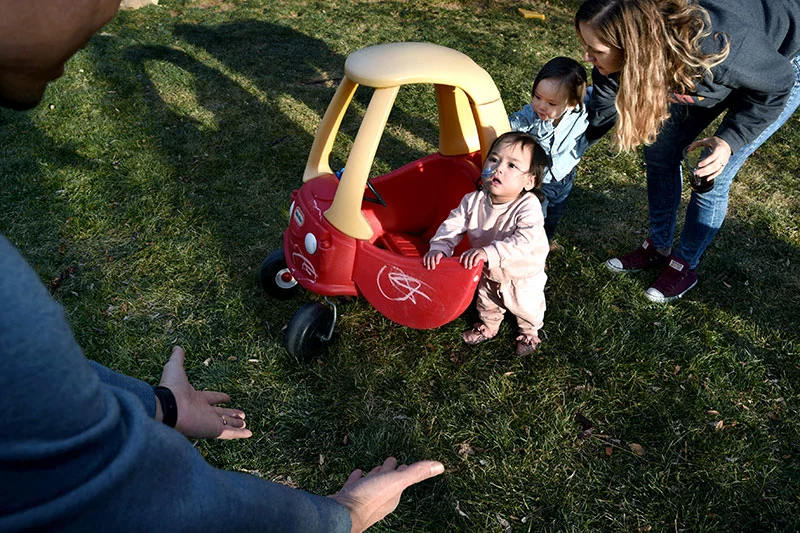
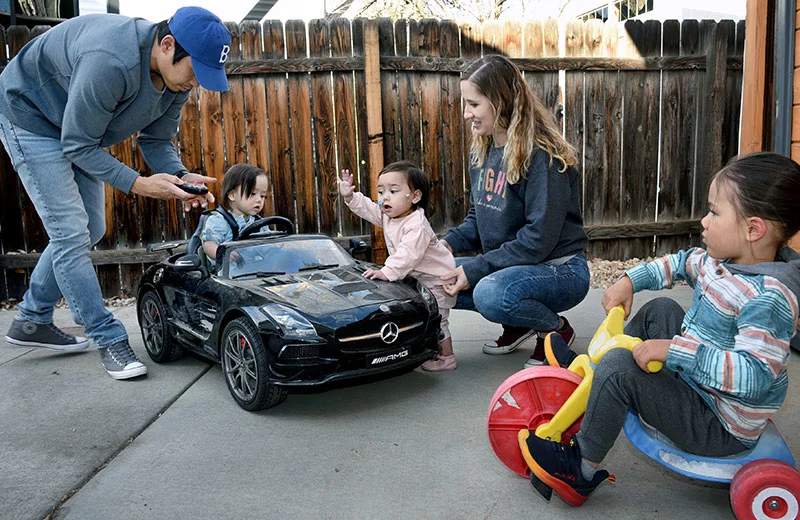
The good news is they have avoided hospital stays since then, but the family has had to take extraordinary precautions to protect the babies. Alyssa and Nhanh pulled Brooklyn out of preschool, and the family members remain fairly isolated in their home, having their groceries delivered, severely limiting contact with family and friends and wearing masks during all public outings. They try to get out every day for walks and to play in their backyard
“It’s hard, but at the end of the day, we were in the hospital for eight months, so we are very cautious about who comes over and where we go,” Nhanh said. “Every day that they don’t get sick is a better day because they are growing healthier.”
Though the Trans miss social occasions and being around other people, having a “boring and quiet” life is exactly what they desire these days after nearly a year of upheaval and stress.
“We are hoping that when they turn 2, their lungs will be a lot stronger and we can re-emerge into the world,” Alyssa said. “By next summer, we hope to be doing more normal family activities, but I think we will still wear masks in public for the foreseeable future.”
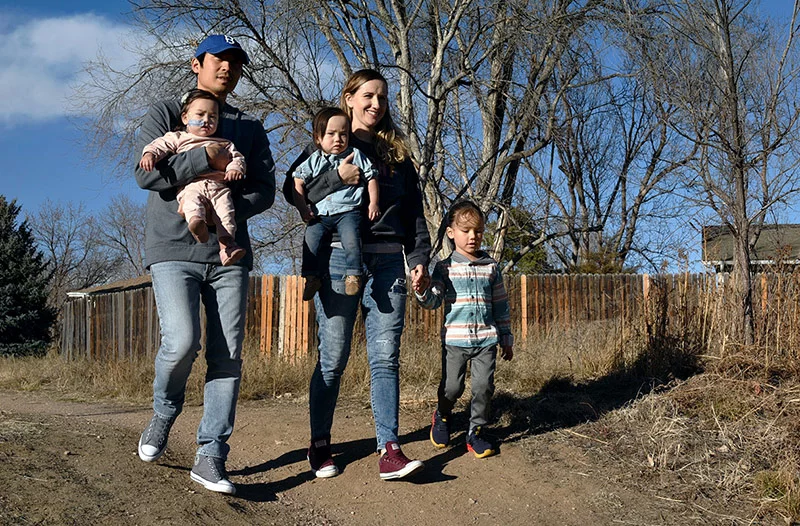
Happy toddlers keep mom and dad busy
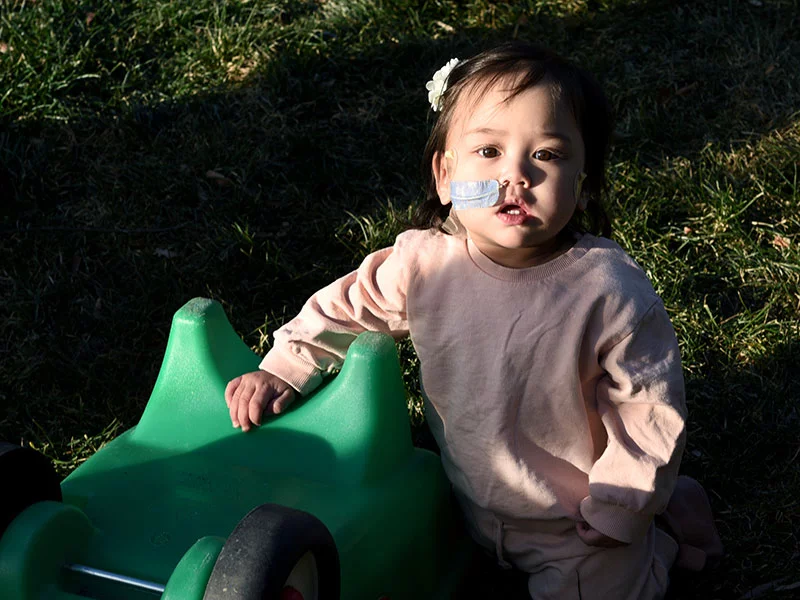
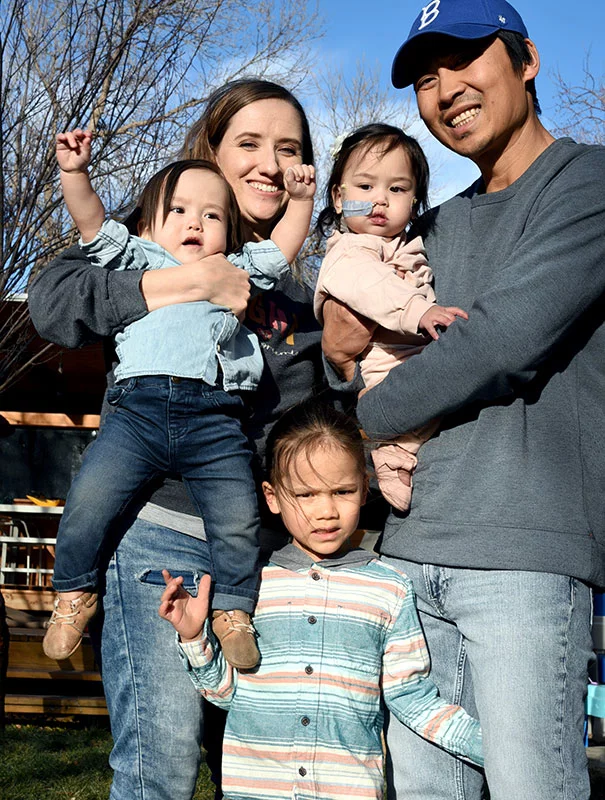
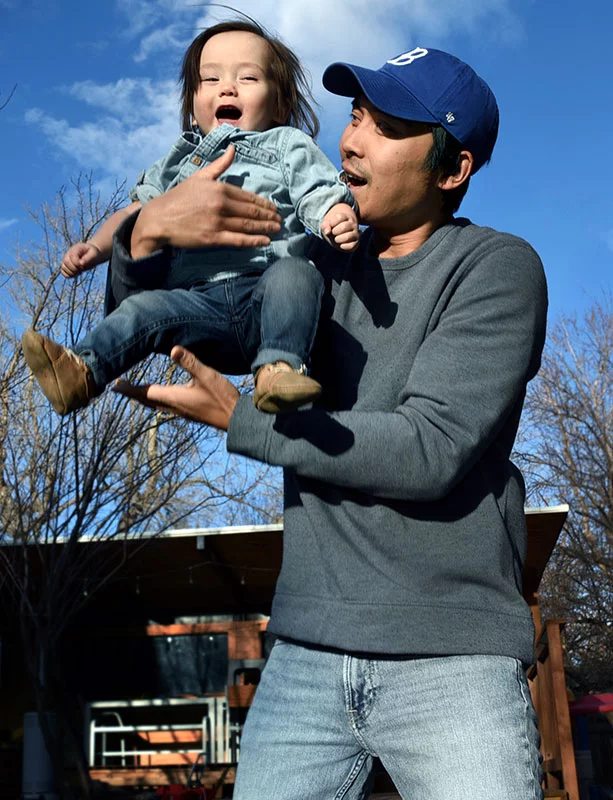
The twins are happy, curious toddlers. Summer now weighs 18 pounds. She still uses a feeding tube and is working with therapists, but her parents hope she will soon catch up with her brother, Grayson, who now weighs 21 pounds.
Brooklyn loves being a big brother and snuggling with sweet-hearted Grayson, while strong-willed Summer is the feistier of the two, or “spicy” as the NICU nurses called her. She likes to put up a fuss during diaper changes.
Alyssa and Nhanh hope the worst is behind them and are thankful for the many people in the medical community who touched their lives.
“It’s really hard to leave your child behind with a stranger, and it takes a lot of trust,” Alyssa said. “The longer you are there, the more you develop a lot of relationships. Everyone at UCHealth was so supportive and kind, and we are thankful to the people who dedicated their lives to helping babies like ours.”
Nhanh and Alyssa always come back to hope as the mantra for their past, present and future.
“I want the twins to know that their entrance into this world was anything but traditional, but their story is perfect. You both are meant to be here,” Alyssa said. “Hopefully, you two will grow and forget about the difficult part of your beginning, but I do hope you never forget to stop and appreciate all the amazing individuals who touched your lives and helped care for you.”