
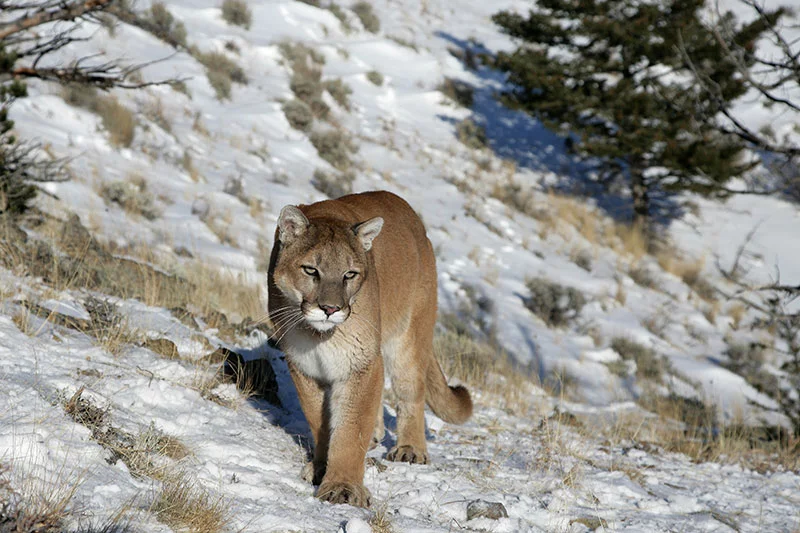
On November 12, 2025, a man running on the Crosier Mountain Trail northeast of Estes Park came across a mountain lion that wouldn’t leave until he threw rocks and swung a tree branch at it. Then, on November 30, a man and a woman hiking near the same trail’s summit found themselves facing one mountain lion on the trail ahead of them and another on the trail behind them. They yelled and threw rocks; the cougars got the message.
Both the man and the pair reported their mountain lion encounters to their local Colorado Parks and Wildlife office. Officers responded in both cases, but the lions had moved on. Officers posted temporary signs warning of increased mountain lion activity to supplement permanent signage at Crosier Mountain Trail. But on Jan. 1, a 46-year-old woman, who was an avid hiker and trail runner, was killed in a mountain lion attack on the same trail.
Wildlife officers tracked down two of three lions suspected in the attack and euthanized them, finding human DNA on the paws of one of them.
The 2026 tragedy marked the first fatal mountain lion attack in Colorado since 1999. Mountain lion attacks on people are rare — as are attacks by black bears, moose, coyotes and wolves. But on rare occasions, they do happen. Here’s what you can do to minimize your risk of a dangerous wildlife encounter.
Mountain lion safety in Colorado
Wildlife experts at Colorado Parks and Wildlife estimate that there are 3,800 to 4,400 mountain lions in Colorado, a number held in check by the roughly 500 mountain lions that hunters take each year.
Colorado mountain lions live mostly in foothills, canyons and mesa country, and they’re more likely to be in lower elevations in the winter as they follow the deer and elk, their main sources of prey.
Are mountain lions aggressive toward humans?
Mountain lions are rarely aggressive toward humans. The human fatality this year marked just the fourth fatal mountain lion attack in Colorado since 1868, according to records from Colorado Parks and Wildlife. In all, wildlife officials say there have been 29 mountain lion attacks in Colorado since 1990.
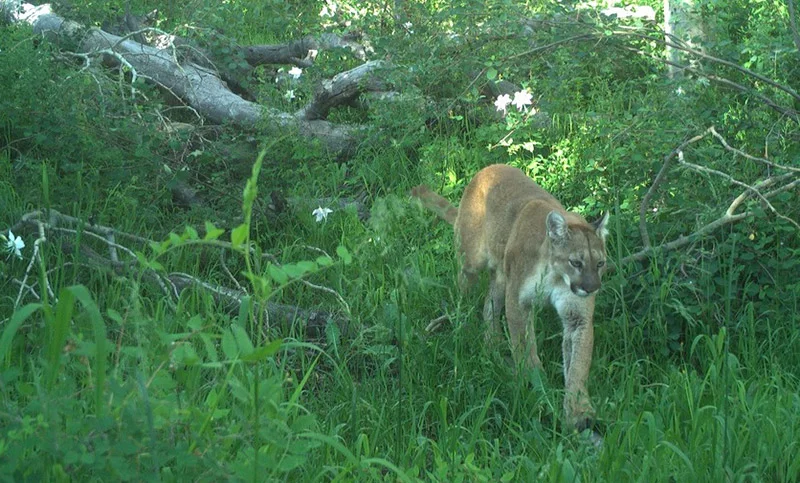
How to stay safe in mountain lion country
To avoid encounters with mountain lions in Colorado, it’s best if you:
- Hike, bike or run with a friend, especially if you’re out at dawn and dusk, when mountain lions are most active.
- Keep children close.
- Keep dogs on leashes.
- Avoid wearing headphones and be aware of your surroundings.
- Wear bright, high-contrast clothing.
- Carry a large walking stick or bear spray, and report recent sightings to park rangers.
The Mountain Lion Foundation also recommends asking park or trail personnel about recent wildlife sightings. Colorado Parks and Wildlife officials encourage people to carry a sturdy walking stick and, if you encounter a dead deer that a mountain lion may have cached, get out of there as fast as possible.
How to respond to a mountain lion encounter
If you encounter a mountain lion, do not try to run away. Mountain lions can run 50 mph and leap 15 feet up a tree. Plus, they’re more likely to consider you prey if you bolt.
Officials from Colorado Parks and Wildlife advise people to move slowly. Raise your arms and, if you’re wearing a jacket, open it to make yourself look larger. Pick up small children and pets. If the lion doesn’t leave, face it and slowly back away.
Experts at the Mountain Lion Foundation encourage people to make noise by shouting, yelling, banging a walking stick or water bottle — that can’t be confused by the lion as the sound of prey — to disrupt and discourage the lion’s hunting instincts. Bear spray also works with mountain lions, according to mountain lion experts.
If the lion attacks, fight back with rocks, sticks, caps, jackets, your bare hands — anything you can use in the moment.
That said, don’t let a fear of mountain lion attack dampen your desire to enjoy the great outdoors. You have a far lower chance of encountering a mountain lion in Colorado than of being injured by a lightning strike here.
To reiterate, if you happen to encounter a mountain lion:
- Don’t run.
- Move slowly.
- Make yourself look big.
- Make noise, like banging water bottles together.
- Flight back with sticks, rocks — anything you can.
Staying safe in black bear country
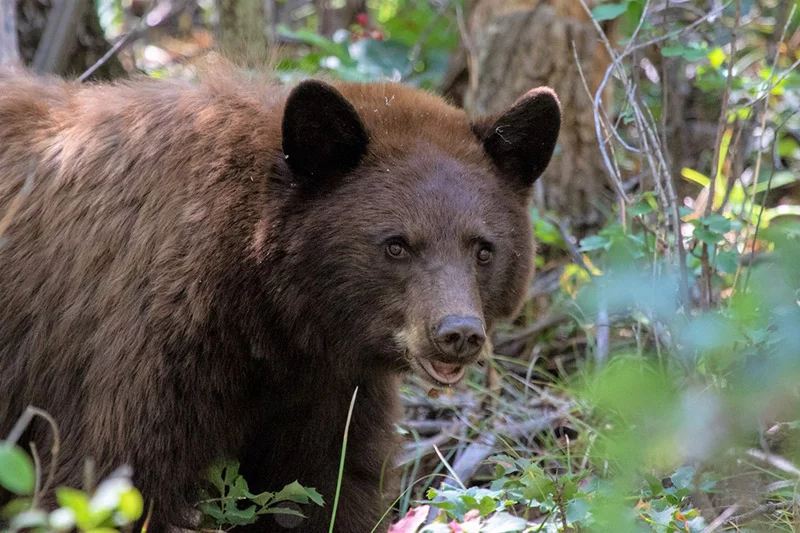
Colorado’s mountains and foothills are home to an estimated 17,000 to 20,000 bears. They’re all black bears. No grizzly bears live in Colorado these days. Not all black bears are actually black, though. They can be honey-colored, blond, brown, or cinnamon, too. Hunters took 1,480 bears during the 2024 bear hunting season.
Are black bears aggressive toward humans?
Black bears are rarely aggressive toward humans. Officials at Colorado Parks & Wildlife received 5,259 reports of black bear sightings and conflicts in 2025, up from 4,996 in 2024. Most reports involve bears trying to access human food sources. But on rare occasions, bear attacks do happen.
Officials at Colorado Parks and Wildlife have reported four fatal bear attacks since 1960. In 2009, a male black bear attacked and killed a 74-year-old woman who had been feeding bears through the fence of her home near Ouray (underscoring the universal message: Don’t feed bears or any other wildlife). In 2021, a 39-year-old woman was killed near Durango by a female black bear while out walking her dogs.
Do dogs offer some protection from black bears?
The opposite looks to be the case. Bears and wolves, from which dogs evolved, don’t get along. Researchers have found that off-leash dogs in particular can trigger defensive attacks on owners by black bears. Keep your dogs on leashes.
How can I avoid an encounter with a black bear?
If you’re camping, follow best practices for storing and disposing of food and drinks, food waste and toiletries such as toothpaste. Bears follow their noses to food, and their noses are about 2,100 times more sensitive than ours. That is, what we can smell from a yard away, they can smell from a mile away.
If a bear shows up at your campsite:
- Make noise, bang pots and pans, use a car horn or whistle.
- Make sure the bear has an escape route.
If you encounter a black bear on the trail: Be especially alert at dawn and dusk, when bears, like mountain lions, tend to be most active.
- Bring bear spray.
- Avoid using headphones.
- Keep dogs leashed.
- Make noise. If a trail runs through berry patches, oak brush or other bear food sources, make extra noise by periodically clapping or calling out to alert bears to your presence, Colorado Parks and Wildlife advises.
What should I do if I encounter a black bear?
- If a bear appears aggressive, stand still and speak to it in a firm tone.
- If the bear stays put, slowly wave your arms and make yourself look bigger.
- Facing the bear, slowly back away until the bear is out of sight.
- If a bear gets within 40 feet, use the bear spray.
- If attacked, fight back with anything available, including your bare hands.
Understanding moose behavior in Colorado
Officials with Colorado Parks and Wildlife began reintroducing Moose to the state in 1978, and they estimate there are roughly 3,000 here now. Hunters took 501 moose in 2024.
Are moose considered dangerous?
Although moose aren’t typically aggressive and feed entirely on vegetation, they’re territorial, and their size (often weighing more than 1,000 pounds) means they have few natural enemies and are therefore less fearful of humans than other wildlife.
What can cause a moose to become aggressive?
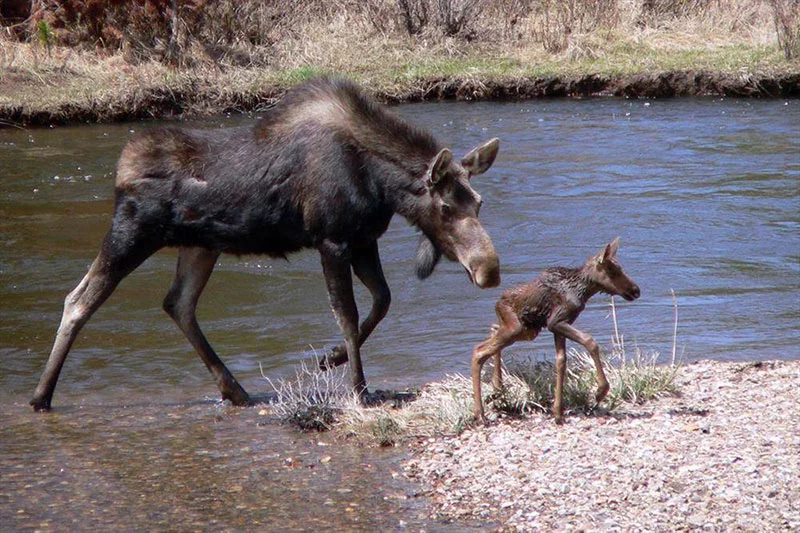
Cows with calves, which are born in late spring and early summer, can become more aggressive to perceived threats to their young, according to experts at Colorado Parks and Wildlife.
As with black bears, dogs can trigger aggressive behavior, so keep them on leash. Most moose conflicts involve dogs. In fact, Colorado Parks and Wildlife officials say, and a retreating dog can lead a charging moose straight to the dog’s owner. That said, such attacks remain rare. Colorado Parks and Wildlife officials have responded to 22 injuries from moose attacks since 2019.
Jack Downing spends five months every year living on seven acres at 9,800 feet above sea level in the Colorado mountains in Hall Valley near the town of Grant. While he regularly sees bears every summer, Downing said encounters with moose are, by far, the most dangerous.
“We have three to five encounters with bears every year and 20 or more with moose. Moose are very big and curious animals, and a mother moose with a young calf is dangerous,” Downing said.
He has two dogs and is very careful when he’s out with his dogs.
“Encountering any moose if you have a dog is very dangerous,” Downing said. “I always carry a small hand-held party horn when I walk the trails around my house.”
Downing has found that horns are more effective than bear spray.
“They have always discouraged moose from getting too close or attacking,” he said.
Downing has a great deal of respect for moose. He views them as the second most dangerous aniamls in the world, just behind hippos.
“You need to give them space and be alert when you know they are in the area,” he said.
What do I do if a moose attacks me?
If you encounter a moose, and it attacks you, run, and get behind a tree, boulder, car or other large object as fast as you can, because this 1,000-pound herbivore can hit 35 mph.
Coyotes in Colorado: What to know
An estimated 80,000 coyotes live in Colorado, and they live about everywhere in the state. They’re active year-round, but become more visible during their breeding season from January to March. They usually eat rodents and other small animals as well as fruit and scavenged food.
Are coyotes aggressive?
Not typically. A study based on data from 2003 to 2010 recorded 3,023 coyote sightings in Denver, along with 471 pet attacks and 13 human attacks. Denver Parks and Recreation officials cite the intentional or unintentional feeding of coyotes as driving habituation to people, which in turn increases the risk of encounters. So, again, please don’t feed wildlife.
One such encounter, in November 2024, involved a 4-year-old girl who approached a coyote, mistaking it for a dog. She ended up hospitalized with head wounds.
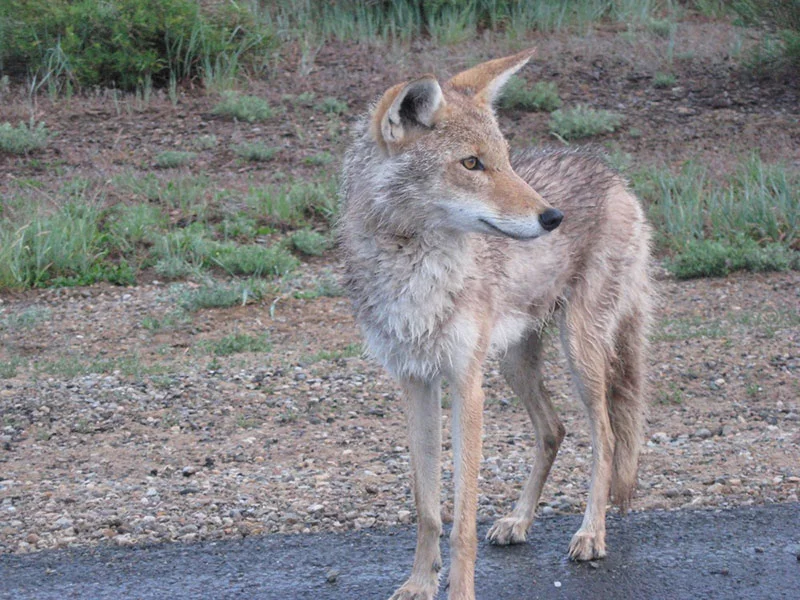
What do I do if I end up in an encounter with a coyote?
Make yourself big, shout loudly and authoritatively, clap your hands and throw rocks or other objects to haze the animal. Pick up small children or pets, and back away slowly while facing it.
Should I be worried about wolves in Colorado?
Since reintroduction west of the Continental Divide in late 2023, wolves have reestablished a foothold in Colorado. There are perhaps 20 wolves in the state now, mostly on the Western Slope. They feed primarily on deer and elk, but will also take livestock and pets.
Are wolves aggressive toward people?
Wolves generally avoid confrontation with people. A Norwegian study of wolf attacks on humans from 2002-2020 recorded 14 attacks in Europe and North America over those 18 years. Two were fatal.
“Considering that there are close to 60,000 wolves in North America and 15,000 in Europe, all sharing space with hundreds of millions of people, it is apparent that the risks associated with a wolf attack are above zero, but far too low to calculate,” the authors concluded.
What do I do if I end up in an encounter with a wolf?
Officials with Colorado Parks and Wildlife say most wolves will try to avoid a confrontation.
Don’t approach wolves, especially if a female is protecting her pups or if you have a dog with you. Allow the wolf space to get away from you. Otherwise, follow the general rules that apply to crossing paths with wildlife: Avoid trails at dawn, dusk, and at night; go with a buddy or in groups; keep children close; be aware of your surroundings; walk with a walking stick; bring bear spray; carry a noisemaker; and keep dogs leashed.