
You’ve probably heard that exercise is great for your health, but how valuable is exercise and why is it so beneficial?
The answer is simple. Staying active boosts both physical and mental health.
“If I could put something in a pill, it would be exercise,” said Liz Chamberlain, assistant professor in the Department of Psychiatry at the University of Colorado Anschutz School of Medicine
It’s an article of faith among health care providers that exercise is good for you, both physically and mentally, but Wendy Kohrt, distinguished professor of Medicine in the Division of Geriatric Medicine at the University of Colorado Anschutz School of Medicine, said it’s not surprising that some people don’t understand exactly what that means and don’t know how transformative physical activity can be.
Kohrt is a leading specialist and researcher in exercise science.
“Every doc you go to says, ‘Yeah, you should exercise. It’s good for you,’” Kohrt says. “Experts don’t tell you what you should do, how frequently or for how long. I equate that to them handing you a bottle of pills and saying, ‘Here. Take these.’”
To learn more about the specific ways exercise helps us and what medical experts recommend regarding physical activity, we spoke with Chamberlain and Kohrt.
If I want to get more exercise, how can I get started?
Kohrt shares these three tips about exercise:
- First, any movement is better than nothing.
- Second, it’s never too late to start exercising.
- Third, the more exercise you do, the better (although there are some limits).
Is it beneficial to exercise in short spurts or do you need to exercise for at least 30 minutes at a time?
Breaking movement into short intervals can be helpful, Kohrt said.
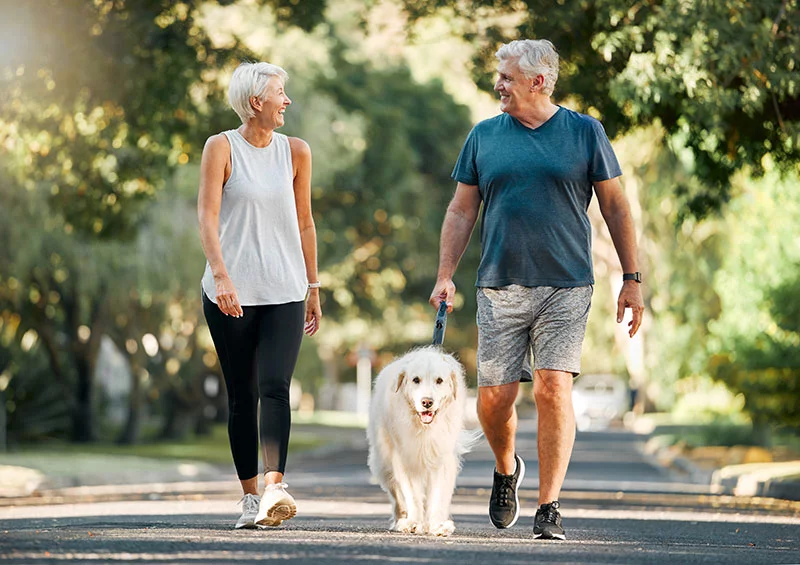
And any movement you do is beneficial — from housework to dancing to enjoying a quick bike ride to walking your dog.
What about getting my heart rate up versus weightlifting? Do I need both?
Along with workouts that get your heart rate up, people also should try to incorporate resistance training, such as weightlifting, Kohrt said.
Strength training is especially important for women, who have less muscle than men and are more at risk for bone loss from osteoporosis. She encouraged people to ask for help when they’re getting started to avoid injury. (If you’re doing strength training, learn whether you need to consume more protein.)
Is it helpful to try a variety of exercises rather than just walking?
Yes, variety is great. Kohrt encourages people to try different activities and move their bodies in different directions.
“Do some twisting and turning with things like tennis, golf and dancing that aren’t having you move in one direction all the time,” she said.
But be careful about being “too explosive” with these movements, especially when you’re trying a new activity, Kohrt said.
“If you do these things at the right pace, they should be relatively safe,” Kohrt said. “A variety of activities, especially as you get older, is probably better than doing the same thing over and over.”
Do men and women need to exercise differently?
Men and women who exercise have some different issues to consider. As Kohrt mentioned, women need to focus more on preserving and building muscle and strengthening bones than men.
One important reason for this is what happens to women as they exit their reproductive years and enter menopause, Kohrt said.
Biology pushes women toward greater sedentary behavior and increases their risk of losing muscle mass and bone density. The biological change could also put women at greater risk for dementia.
“It’s a time in life where women need to be paying more attention to being physically active because they might need to override their biological drive,” Kohrt said.
Is there a balance between the benefits and risks of exercise?
As Kohrt tells people, exercise is always beneficial, but she added that her research into how the human skeleton responds to exercise presents a nuanced risk-benefit picture.
On the positive side, she and her colleagues have shown that exercise has an anabolic effect: it helps the body build bone as it adapts to the stress it is placed under. However, further investigation reveals that, at some point, exercise triggers a catabolic response – that is, the bone begins to break down, putting individuals at greater risk of fractures.
“This happens very quickly,” Kohrt said. “I still believe that some degree of physical activity is absolutely essential for bone health. But I now understand that there is a tipping point somewhere, that at some point the catabolic effect could outweigh the anabolic effect.”
Does nutrition play a role in encouraging or discouraging people from exercising?
Yes, nutrition can be an important factor in exercise, said Liz Chamberlain, who works in the CU Medicine Weight Management Clinic at the University of Colorado Anschutz Health and Wellness Center.
A growing body of evidence points to the importance of a fiber-rich diet with more lean protein and fewer processed foods. Eating these foods at consistent times in the day can improve sleeping, boost energy levels and sharpen focus, she said.
“It helps to give people the fuel they need to get through the day, get their work done and also get some movement so they will continue to feel better,” Chamberlain said. “If you eat well, it may be easier to go for a walk. If you go for a walk, you may feel more motivated to want the foods that can improve your mood.”
Is sleep important if I want to make exercise a regular part of my routine?
Yes. The amount of restorative sleep we get each night obviously affects our energy levels, but Chamberlain also noted research that points to a “bidirectional” relationship in which sleep affects mood disorders and vice versa. That, in turn, can affect one’s ability and desire to exercise.
“Sleep is critical to everything, even weight loss,” she said. “Research shows that people who don’t sleep well can have trouble managing their weight. They’re too tired to exercise and make food choices that are carbohydrate-driven because they are exhausted. And when we are tired, we often eat.”
Chamberlain advised people to not only manage their diet, but keep a sleep schedule, avoid having their phones available at bedtime and try to wake up around the same time every day to get the sunlight that maintains the body’s circadian rhythm.
The truth is, I just don’t like to exercise. What can I do?
For people who don’t like to exercise, Chamberlain recommended pairing physical activity with something pleasurable, such as listening to a podcast or watching a television show while walking on the treadmill.
“You kind of make a deal with yourself that if I want to watch this show or listen to this music, I do it on the treadmill,” she said.
People may also find motivation to move in mindfulness exercises that increase their attention to and appreciation of their surroundings, Chamberlain said.
“When you go out for a walk, you can use your senses to take in what you see, hear and feel,” she said. “You get the movement and you get the experiences through your senses. It’s a great way to work with depressive symptoms as well.”
Kohrt said it could be helpful for some people to simply think in terms of moving more instead of “exercising.”
“It’s uninterrupted sitting time that ends up having deleterious effects that could be prevented by focusing on moving,” she said.
She recommended standing to strengthen the skeleton or taking short “exercise snacks” to break up long periods of inactivity. Simple wins also include parking the car far away from the front of the store and walking upstairs instead of using the escalator or elevator.
“Try to build physical activity into your day if you can’t find a 30-minute block to go out for a walk or a jog or a bike ride,” Kohrt said.
You can also build habits over time. Let Colorado Springs Mayor “Yemi” Mobolade inspire you. He dealt with a scary heart blockage and thought he didn’t have time for cardiac rehabilitation, but became a huge advocate for his workouts as soon as he carved out time to do them and formed a new habit.
Can exercise improve symptoms of depression and other mental health challenges?
Yes, evidence shows that exercise can relieve symptoms of mental health disorders.
Chamberlain pointed to a 2022 JAMA Psychiatry review and study that concluded that 150 minutes of exercise a week could help to prevent one in nine cases of depression.
Experts at the U.S. Centers for Disease Control and Prevention also point to the power of physical activity to decrease symptoms of anxiety and depression and improve brain health.
How does exercise affect what happens in our brain, and how does that affect our mental status?
“Everything we do affects our brain chemistry,” Chamberlain said. She pointed to key brain chemicals stimulated by exercise. These hormones and neurotransmitters include:
- Serotonin, which helps to regulate mood.
- Dopamine, which can improve mood and motivation.
- Oxytocin, which helps to reduce stress.
- Norepinephrine, which also can help regulate mood, alertness and stress.
These “feel-good” chemicals released by exercise can help to relieve symptoms of depression, anxiety and other mental health disorders, Chamberlain said.
In general, is exercise a stand-alone treatment for mental health symptoms?
No, exercise alone will not resolve symptoms of depression and other mental health disorders. Chamberlain emphasized that exercise works best in combination with treatment from a licensed mental health professional or medical provider.
Many providers will help patients manage these symptoms with medications – such as SSRIs, or selective serotonin reuptake inhibitors – as well as with evidence-supported “gold standard” treatments like cognitive behavioral therapy, Chamberlain noted.
“In addition, symptoms can be mitigated with small changes, including attention to diet and positive interactions with people,” she said.
What are some practical ways to help people see the mental health and physical benefits of exercise?
Chamberlain said she likes people to rate their mood on a scale from 0 (miserable) to 10 (joyful), then take a 20-minute walk and rate their mood again afterward.
“If they are able to track that, it’s very unusual for a person’s mood not to get a little boost after walking,” she said.
“I also have people schedule when they are going to go for a walk,” to create some personal accountability, Chamberlain said. With a specific goal of walking, say, three days a week, starting with 10 minutes, they can add more or swap a scheduled day for another one, she said.
“Working with small, achievable goals can create a habit and a self-reinforcing reward system.”
Kohrt agreed that accountability is an important factor in motivating people to increase their physical activity.
“If you have some obligation to another person, if you walk with somebody or are going to play pickleball, you can’t just stand that person up,” she said.
Chamberlain said exercise can also be an antidote for social isolation, a frequent symptom of depression. She recommends that people build “health networks” of friends, coworkers and others with whom they can connect over common interests or time spent together on short walks or other activities.
She helped facilitate this component as the health psychologist interventionist in Colorado for the ELM (Enhanced Lifestyles for Metabolic Syndrome) multisite study, recently published in JAMA Internal Medicine.
“Having that network can help you stay engaged in physical activities,” Chamberlain said.
Tell me more about the evidence supporting the many benefits of exercise
More than three-quarters of a century of scientific research has provided proof that exercise is incredibly beneficial.
Kohrt points to the London Transport Workers Study, which began in 1949 and concluded in 1952. Researchers compared rates of coronary heart disease among London bus drivers, who mostly sat during the workday, with those of conductors who moved up and down double-decker buses, taking customers’ tickets.
The study found significantly lower rates of heart disease in the conductors. The researchers did not claim that the conductors’ physical activity lowered their risk of disease, but said it was unlikely to have occurred by chance.
Thousands of papers that investigated the benefits of physical activity followed, and in 2018, the Department of Health and Human Services issued its Physical Activity Guidelines for Americans. The report detailed the many health benefits of moderate to intense physical activity, including reducing the risk of heart disease, diabetes and other chronic conditions.
We hear the term ‘movement is medicine.’ Is there research that supports that idea?
Yes. The Diabetes Prevention Program (DPP) study lends strong support for the notion of movement as medicine.
The National Institutes of Health-sponsored trial, which ran from 1996 to 2001, was co-led by Dr. Dana Dabelea, an epidemiologist and director of the Lifecourse Epidemiology of Adiposity & Diabetes (LEAD) Center at the Colorado School of Public Health.
The DPP study enrolled more than 3,200 people with prediabetes, which put them at risk for progressing to Type 2 diabetes. They were randomly assigned to one of three groups:
- Those who received metformin, a medication that manages insulin.
- Those who received a placebo and regular recommendations for a healthy lifestyle.
- Those who completed a lifestyle program that included weight loss and a minimum of 150 minutes of moderate physical activity per week.
The study concluded that lifestyle changes, including regular physical activity, were decisively more effective in preventing Type 2 diabetes than metformin.
Do questions remain about how and why exercise is beneficial for our health?
Yes, there is still much to explore in that question. The DPP study “is an example of why we need to understand the mechanisms that are generating these responses to exercise that result in health benefits,” Kohrt said.
For example, the DPP study showed that metformin was less effective in participants aged 60 and older than in younger participants. Overall, the older participants benefited the most from the lifestyle interventions. It was also unclear how much weight loss and other factors might have contributed to the results.
Answering those questions could help people follow exercise programs tailored to their age, sex, health conditions and other factors, Kohrt said.
Are we making progress in understanding the science behind the benefits of exercise?
Yes, research into that question continues – notably on the University of Colorado Anschutz campus.
MoTrPAC (The Molecular Transducers of Physical Activity Consortium) is a major study funded by the National Institutes of Health Common Fund, which supports “discovery across all biomedical and behavioral research.”
The idea of the 10-year trial, which has enrolled more than 2,000 participants of different ages across 10 clinical sites, is to “build a molecular map,” of the signaling that occurs in the body when people exercise, said Kohrt, who is principal investigator for the clinical study site at the University of Colorado.
The information from MoTrPAC could provide “a pathway for precision exercise medicine,” because it might help providers prescribe specific exercises tailored to improve the health of the heart, lungs, brain and so on, Kohrt said.
MoTrPAC researchers build the map from demographic, clinical and biological data gathered from human participants and from animals.
The elements of the study include analysis of:
- Responses of the body to endurance and resistance exercise.
- Samples of blood, muscle and fat tissue.
- Responses of the body to exercise after varying lengths of time.
“No other study has come close to generating the volume of data that we are generating, Kohrt said. “When I talk to people about the potential impact of this, it is almost infinite.”
How could data from MoTrPAC study improve our understanding of exercise as therapy?
The key lies in identifying how exercise affects the body’s functions and how it might be prescribed to treat a specific condition, Kohrt said. Drugmakers use this approach to develop new medications, she noted.
“They pretty much know what the molecular target is,” she said. “They know how that medication is working.”
With help from MoTrPAC, the same could be true for exercise. Hypothetically, a blood pressure medication might affect a particular molecular pathway. If data from MoTrPAC shows that exercise also affects that pathway, a provider has the support to prescribe physical activity as an alternative to medication.
To put a finer point on it, the data might also show that physical activity affects the signaling most effectively in older adults, Kohrt said.
“We’ll have the knowledge to develop more focused hypotheses – that we may still have to prove – about when exercise can be used to treat, and not just prevent, disease and in whom,” she said.