
By and large, the foodstuffs in our pantries have been put up, canned, or packaged by others.
We could buy raw, fresh beans and dry them for the pantry, but it’s much easier to have someone else do it. We could knead flour and water for pasta, then extrude and dry the noodles ourselves, but, again, it costs so little to have a large pasta maker do the job for us.
And why not keep things that way? It sure makes economic sense.
But it’s also nice to have some storable pantry items on hand that go the extra mile in flavor and usefulness, and that you’ve prepared yourself.
Here are three such homemade pantry items: eminently freezable stocks (some call them broths) specifically rendered and useful for summer cooking; a confit (“conserve”) of duck legs that can be stored in the fridge or frozen in its own fat for months; and clarified butter, also known as “ghee,” that is close to nonperishable.
Light and flavorful stocks or broths that lift summer cooking but are great year-round
Many of us cooks routinely make stocks (some call them broths) using leftover chicken carcasses or steak bones, mushroom stems and other vegetable peelings or discards, even fish bones or crab and lobster carapaces.
These we freeze and then utilize for all manner of wet cooking: stews, soups and as the basis of braises and glazes.
By and large, all that is autumn or winter cooking, however, reaching its apogee in late November when rivers of chicken stock tsunami through the kitchen to prepare Thanksgiving Day dinner.
At the beginning of summer, though, I suggest that we comfort ourselves and our cooking by making and using stocks — certainly ones that are lighter and brighter — to add flavor to the cooling foods of warmer weather, such as grain salads, poached and chilled fish filets, or cold soups such as gazpacho or vichyssoise.
Or, for indeed, almost all summer cooking. Why not boil the kidney beans for a three-bean salad in a light stock made of vegetable peelings? You’d ramp up the flavor a few notches that way. Same for boiling pasta, farro, rice, or potatoes for other summer salads.
The main idea is to find flavor, always and everywhere, to add to whatever cooking we do.
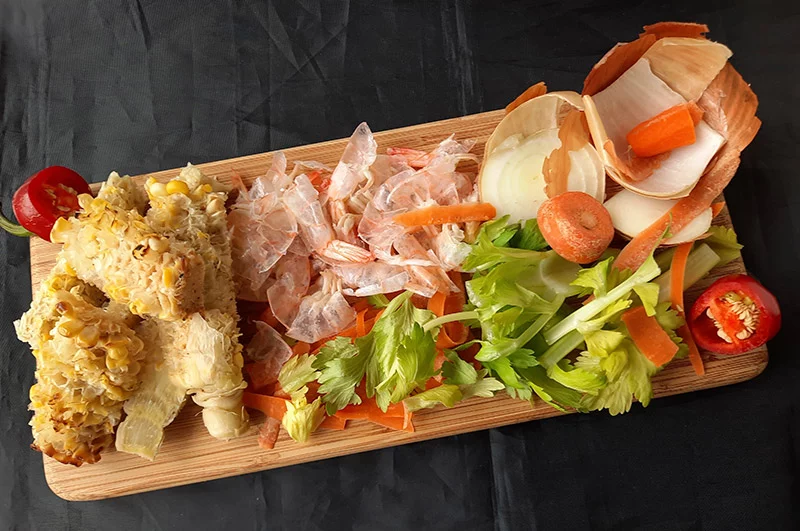
The core recipe here serves as the base for two summer stocks: one made from corn cobs, the other from shrimp peels. If frozen, such stocks are also serviceable year-round.
Duck confit: A versatile make-ahead cooking staple
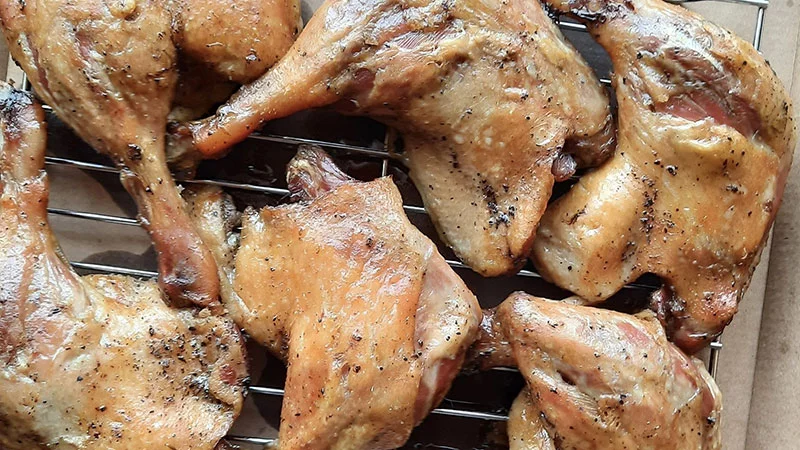
Duck confit is duck leg and thigh meat cooked and then preserved in its own fat. The meat then lends itself to many uses in other dishes or preparations.
Duck confit is particularly delicious in the wintertime. Added to a stew (or indeed, to the great cold-weather pork-and-bean pot called cassoulet), its flavors are close to animalistic: terrific, lip-glossing fat; skin as crisp as kettle fries; and deeply flavored meat.
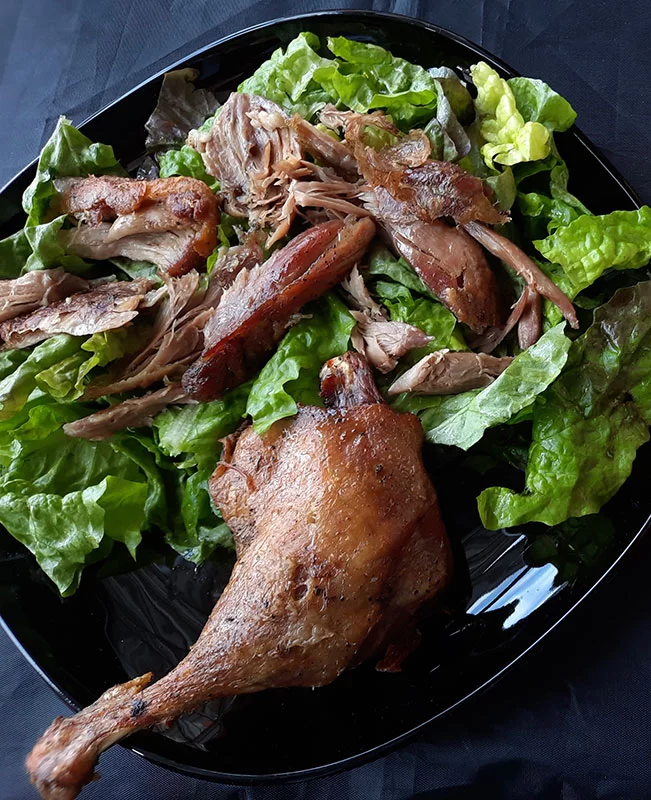
But if the sun is out, enjoy it shredded and scattered around some lightly dressed hearty greens, a French bistro classic. If submerged in its cooking fat and tightly wrapped, duck confit stores well in either the refrigerator or the freezer for several months.
Clarified butter, also known as ‘ghee,’ is a high-heat, flavor-boosting staple
“Ghee” is the Asian Indian-derived name for clarified butter that has spent a bit more time on the stovetop than mainline French-style clarified butter. Heating the precipitated milk solids until they begin to taste like Sugar Baby candy makes the ghee itself nutty and deeper in flavor.
It is a pantry staple that lends intense butter flavor to a range of foods. It’s also a ‘no smoke’ fat for trying sautéing.
It still functions as clarified butter, of course. That is, its smoke point is highly elevated (to around 400 degrees) from plain butter and is profitably used to sauté fish or vegetables at high heat; as a dip (called “drawn butter”) for shrimp, crab or lobster; as a base for a hollandaise; or as the perfect drizzle for popcorn.
Of course, it’s the favored fat in the early stages of many a savory Indian dish.
Summer stock base
Makes 8 cups.
Ingredients
- 2 tablespoons good-quality olive oil
- 1 yellow or white onion, unpeeled and halved along its “poles”
- 2 garlic cloves, unpeeled and smashed lightly
- 1 bay leaf
- 20 black peppercorns
- 20 coriander seeds
- 3-4 sprigs (or 6 stems only) flat-leaf parsley
- 1 1-inch piece fresh ginger, unpeeled (optional)
- A scant handful celery leaves (optional)
- 10-12 carrot peels (optional)
- 8 cups water
Directions
Over medium-high heat, place a large heavy-bottomed pot or Dutch oven. Heat the olive oil and, when it shimmers, add the onion halves, cut side down, and leave them to cook, without jostling, until they are well charred, about 5-6 minutes.
Move the onions to the side and place the remaining ingredients, except for the water, in the center of the pot and gently stir them around until they become aromatic, about 90 seconds (or a bit more if using celery leaves and carrot peels).
Add the water and other solids (for example corn cobs or shrimp peels from the variations below), bring to a boil, then lower to a simmer. Cook, uncovered, for 60 minutes, stirring gently only once or twice.
Remove from the heat and let cool down slightly, then pour through a fine-mesh sieve or colander, either of which is lined with cheesecloth, set over a large bowl. When cool enough to portion, freeze in containers of suitable size for use in further preparations.
For corn cob stock: Add anywhere from 6-8 full-length cobs (or their equivalent in smaller cobs) that have been shorn of most of their kernels. It’s OK (even better) if the corn was previously grilled. You also may add a rind or two of Parmigiano-Reggiano cheese to the stock along with the cobs. That will add extra umami.
For shrimp stock: Add anywhere from 4-6 cups of shrimp shells, peeled from cooked or raw (but thawed) shrimp. You also may add 1/2 lemon to the stock along with the shells.
Confit of duck
Adapted and prepared by Bill St. John from recipes at cooking.nytimes.com, washingtonpost.com and “Gourmet Today” (2009). Makes 6.
Ingredients
- 6 duck legs and thighs, rinsed and patted dry
- 1 mounded teaspoon kosher or sea salt
- 1 teaspoon freshly ground black pepper
- 1 large bay leaf, crumbled into bits
- 10-12 sprigs dried or fresh thyme
Directions
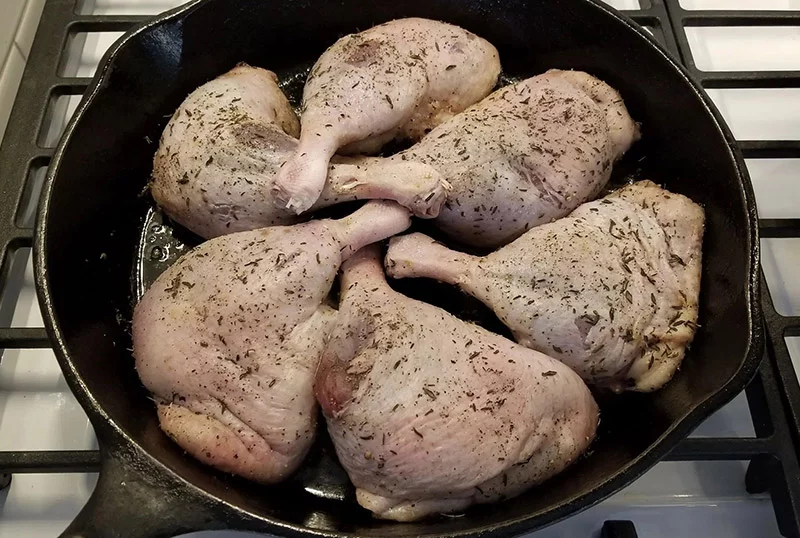
Find a non-reactive tray that will accommodate all the duck legs in one layer. Mix together the salt, pepper and bay leaf bits and sprinkle half the mixture onto the tray. Lay the duck legs, fat side down, onto the tray, allowing them to pick up the seasonings on that side. Flip all the legs over, skin side up and sprinkle with the remaining half of the seasonings. Arrange the thyme sprigs evenly over the legs, pushing them down onto the meat.
Cover the tray snugly with 2-3 layers of plastic wrap and then a layer of heavy-duty foil wrapped around the edges of the tray to keep everything tight. Place the tray, foil side down, in the refrigerator. After 12 hours (or thereabouts), flip the tray over and keep in the refrigerator for an additional 12 hours. (The legs may season themselves thusly for up to 72 hours total.)
When ready to confit the duck, heat the oven to 325 degrees. Shake the legs of any clinging seasonings (especially the thyme sprigs) and place each leg, fat side down (opposite the skin side), in a large oven-proof skillet, fitting all the legs snuggly together. Heat over medium-high heat until their fat begins to render, 15-20 minutes. When about 1/4 inch of fat covers the bottom of the skillet, flip the duck legs over (you may need to scrape under them with a metal spatula to loosen them) and rearrange them all, again snuggly, skin side up.
Cover the skillet with heavy-duty foil and place it in the oven. Roast the legs for 1 hour, rotating the skillet, then roast for 1 more hour, 2 hours total. Remove the foil and roast for an additional 45 minutes to 1 hour until the legs are all a deep golden brown. Remove the legs from the skillet and let drain over a brown paper bag or clean cardboard. (Strain and reserve the duck fat for frying, deep-frying or other uses such as flavoring roasted, salted potatoes.) The legs may keep in the refrigerator for up to 5 days or, if frozen, for up to 5-6 months.
Alternatively, do not drain or let rest on paper. Place the duck legs in small crocks or bowls and pour the rendered fat over them, submerging them. When cooled down, the confits will keep, in their fat, for several months either in the refrigerator or the freezer.
To serve them, however, crisp them, from room temperature, in one of two ways: (1) Heat the oven to 450 degrees. Place the number of legs to be served, skin side up, on a baking tray lined with parchment paper or foil. Roast for 20 minutes until the fat glistens on the crisping skin. (2) Cook the legs to be served in a large non-stick skillet set over medium heat, covered, beginning skin side down for 10 minutes, then skin side up for an additional 10-15 minutes.
One very traditional way to serve the duck leg meat is atop dressed greens as a salad.
Ghee (long-cooked clarified butter)
Ingredient
- 2 cups (4 sticks) unsalted, high-quality butter
Directions
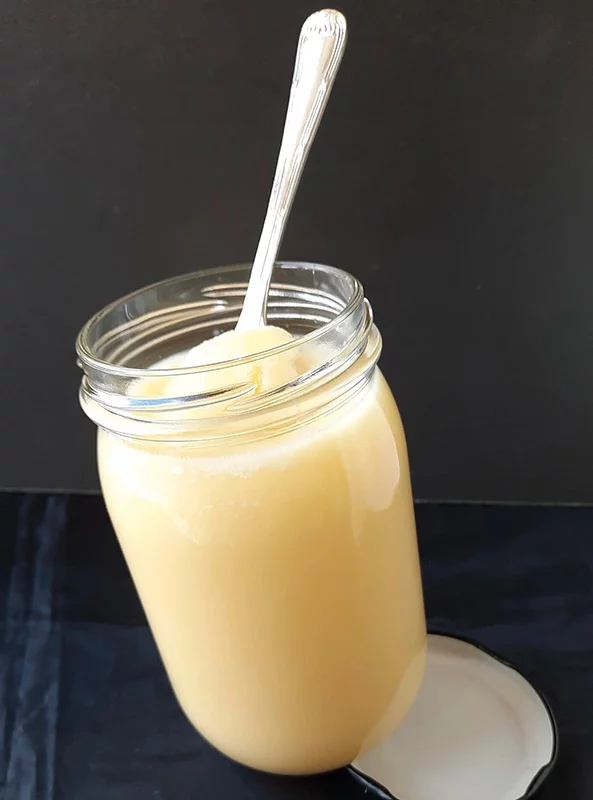
In a medium-sized saucepan over medium heat, melt the butter and continue cooking until a layer of milk proteins begins to both float to the top as white foam and fall to the bottom as white sediment. Bring to a slow boil; the milk proteins on top will froth and foam. (You may skim these if you wish although in the long run, it is not necessary.)
Lower the heat and continue to cook. The top froth will decompose and fall (unless skimmed). As the water evaporates out of the butter, the boiling will calm and then cease. Being attentive against burning, heat further until the milk proteins on the bottom of the pot turn golden brown. The whole process will take 1 hour or a bit more.
Strain through cheesecloth or a coffee filter into a heatproof container. (The caramelized, browned milk solids may be saved to top ice cream.) Let cool and refrigerate. Ghee will keep up to 6 months, refrigerated, or longer if frozen.
More make-ahead recipes that build flavor over time
Restore yourself with broths that nourish and fortify. Slow‑simmered liquids draw flavor and body from bones, meat and vegetables, creating foundations that can be enjoyed on their own or used to support meals.
Hot soup is often just a bowl of healthy eating: it’s commonly a vehicle for vegetables, generally low in fat and chock full of fiber. If it’s got noodles or other carbs, it’s a source of energy. Because it has just enough salt, it enhances or awakens dormant or clogged-up senses of smell and taste. Make this stock of roast chicken carcass, doubled, or Fennel and Leek Soup (‘Hot Vichyssoise’).
Bank on the most overlooked byproducts of everyday cooking. Browned bits, rendered fats, bones and flavorful liquids can be saved and used later to deepen and improve future meals.