

Sunblock had not been around that long when Phil Sheridan grew up, and in those days, there wasn’t a lot of awareness about the importance of protecting skin from harmful UV rays.
“I used to start the summer with a burn to get that tan going,” Sheridan said.
But as he got older, his perspective changed — as did his skin.
Sheridan knew that his lack of skin care in his younger days, combined with his fair complexion and Irish descent, meant he had a predisposition for skin cancer. He’d actually had a few spots removed in the past by his primary care doctor.
That was almost two decades — and several dozen cancerous growths — ago.
Benefits of annual skin cancer screening
With Colorado’s altitude, sunny days and so many active people enjoying the incredible outdoors, paying attention to the sun’s effects on our skin is critically important. And seeing a dermatologist for regular skin cancer screenings can be a lifesaver.
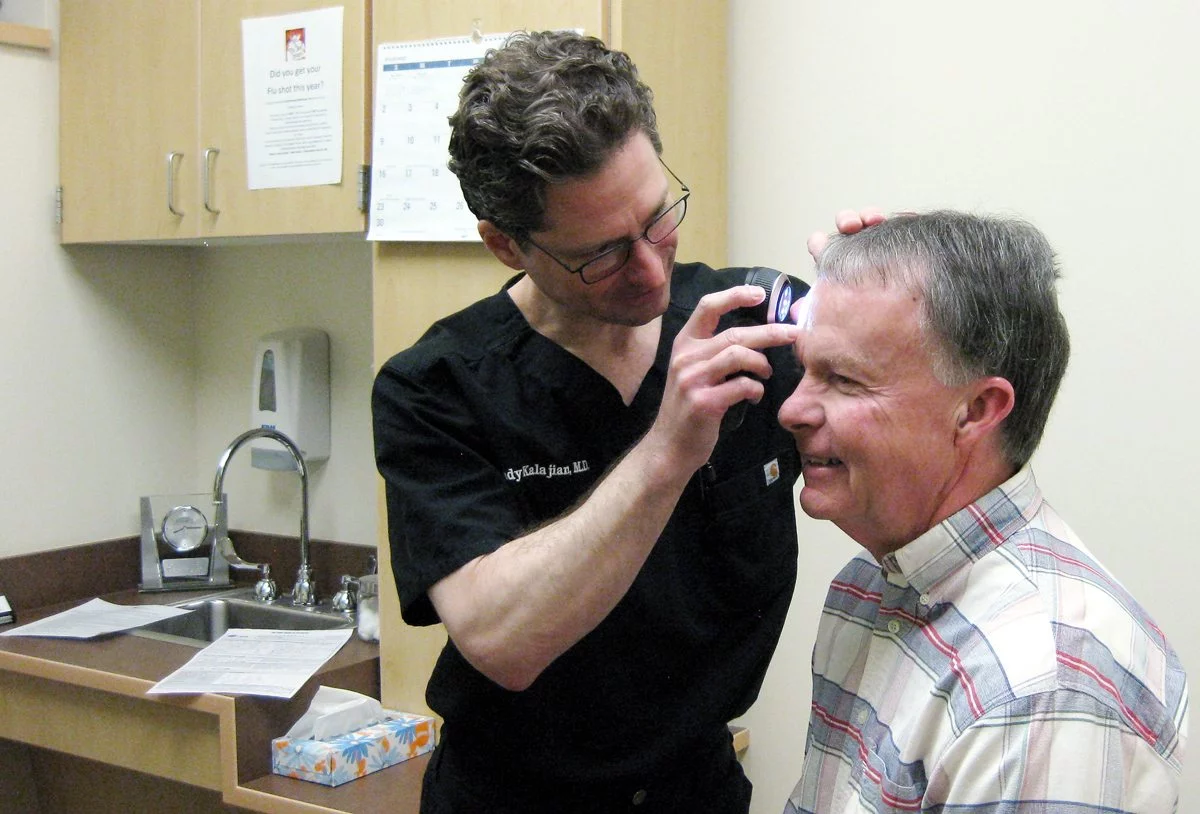
There are four types of skin cancer: actinic keratosis, basal cell carcinoma, squamous cell carcinoma and melanoma. Most people have heard of melanoma, as it is the most dangerous of skin cancers. The most common is basal cell carcinoma, which a local dermatologist found during Sheridan’s first screening.
Luckily for Sheridan, non-melanoma skin cancers (basal cell carcinoma, actinic keratosis, and squamous cell carcinoma) are highly curable, according to Dr. Miho Scott, a medical oncologist and hematologist who sees patients at UCHealth Cancer Care and Hematology Clinic – Harmony Campus.
“The best way to detect skin cancer early is to recognize new or changing skin growths, particularly those that look different from other moles,” she said. “All major areas of the skin should be examined regularly.”
Although Sheridan evaluated his own skin, he realized the benefits of having a dermatologist conduct the screening and follow up on any concerns.
UCHealth Oncologist and Hematologist Dr. Ross McFarland said that non-melanoma skin cancer occurs in areas where the skin has been consistently or severely exposed to the sun, such as the head and neck, shoulders, forearms and backs of the hands. Melanoma can occur in other places, such as between the toes or upper thighs – areas not normally exposed to the sun. McFarland also sees patients at UCHealth Cancer Care and Hematology Clinic – Harmony Campus.
Anyone with a family history of skin cancer, a large number of dark moles (greater than 50), or a history of an atypical mole should get checked annually by a trained health care provider, he said. Someone with a personal history of skin cancer should continue to monitor their own skin throughout the year.
“It’s helpful to have a loved one, spouse or friend help because you can’t see everything, such as your back, but what you can see, you should look for those ABCDEs,” McFarland said.
ABCDEs of skin cancer screening
- Asymmetry – one half of the mole doesn’t match the other half.
- Border irregularity – the edges are ragged, notched or blurred.
- Color – the pigmentation is not uniform, with variable degrees of brown, black, red, blue, gray or white.
- Diameter – areas greater than 6 millimeters (the size of a pencil eraser).
- Evolution – a mole that is changing in size, color, shape, or the appearance of a new lesion
“Almost all cases of basal cell and squamous cell skin cancer can be cured, especially if the cancer is detected and treated early,” Scott said.
Treatment for skin cancer
Most early skin cancers can be treated by removing the growth through several methods, from freezing to surgical removal.
For Sheridan, he’s had most of his removed by freezing or cutting, with a few being deep enough to require stitches, he said. He’s had several Mohs surgeries, a specialized technique to remove skin cancer in sensitive areas like the face, where minimizing tissue loss is critical. And though it was sometimes uncomfortable to have them removed, it was never painful, he said.
“I want to be aggressive and have (cancerous lesions) removed because I don’t want them to grow,” he said. “I’ve been fortunate that none of them have become serious.”
For several years, he has seen his dermatologist every six months to ensure any serious skin cancer is caught early.
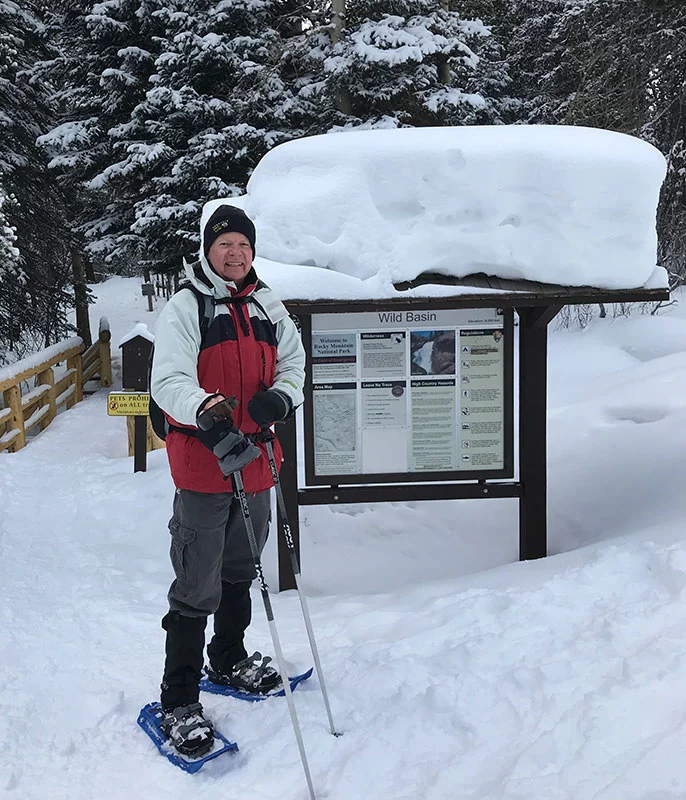
Sheridan’s run-in with skin cancer hasn’t changed the fact that he loves the outdoors. He continues to volunteer as a park ranger at Rocky Mountain National Park, hike, cycle, snowshoe and play golf. He is always aware of how he protects his skin.
When going outdoors, apply sunscreen with a sun protection factor (SPF) of at least 30, and wear a wide-brimmed hat, sun-protecting clothing and sunglasses.
“I love being outdoors, and my skin issues have not disrupted that,” Sheridan said. “I just make sure I wear long sleeves, a hat and sunscreen protection, and continue to go get screened.”